+91 9990176000
 +91 9999097600
 CALENDAR 2026


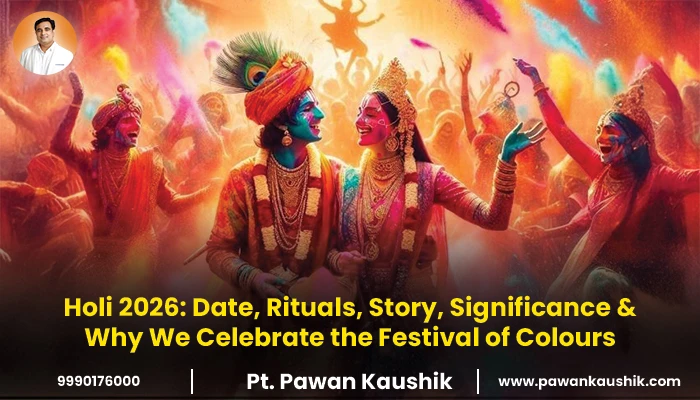 Holi is one of India’s most joyful and widely celebrated festivals, known as the festival of colours. It marks the victory of good over evil, the arrival of spring, and the celebration of unity, forgiveness and new beginnings.
Every year, Holi is celebrated with great enthusiasm as people apply colours, share sweets, meet loved ones and welcome a fresh start with positivity. The celebration takes place over two important days — Choti Holi (Holika Dahan) and Holi (Rangwali Holi).
This blog explains Holi date 2026, why Holi is celebrated, the story behind Holi, the significance of colours, rituals, history and everything you need to know.
When Is Holi in 2026? | 2026 Holi Date
Holi is celebrated for 2 days every year. The first day is celebrated as Holika Dahan, and on the next day, Rangoli Holi is celebrated. Holi in 2026 will be celebrated on the following dates:- Choti Holi / Holika Dahan 2026 falls on the 3rd of March 2026 (Tuesday).
- The Rangoli Holi 2026 falls on the 4th of March 2026 (Wednesday).
Holika Dahan Muhurat
The subh muhurat for holika dahan is from 6: 22 PM to 08: 50 PM on 3rd of March 2026.These Holi dates are based on the Hindu lunar calendar, where Holi is observed on the Purnima (full moon) of the Phalguna month.
People often ask: “When is Holi in 2026?” The answer is simple: 4th of March 2026, with Holika Dahan 1 day before.

Why Do We Celebrate Holi? | What Is the Story Behind Holi?
Holi is deeply rooted in ancient Hindu mythology, and its origin is connected to the legendary story of Prahlad and Hiranyakashyap, which explains the true meaning of Holika Dahan. As the story goes, Hiranyakashyap was a powerful king who wished to be worshipped as God.However, his own son, Prahlad, refused to worship him and remained a devoted follower of Lord Vishnu. This angered Hiranyakashyap, who made several attempts to harm Prahlad, but none of them succeeded because Prahlad’s devotion protected him.
In one final attempt, the king asked his sister Holika, who had a magical cloak that protected her from fire, to sit with Prahlad in a burning pyre. Holika agreed, thinking she would remain safe. But as the fire blazed, the protective cloak flew away from Holika and covered Prahlad instead. Holika was burned to ashes, while Prahlad emerged unharmed.
This powerful incident represents the victory of devotion, truth and righteousness over ego, cruelty and evil. Holika’s destruction and Prahlad’s safety symbolise that negative forces eventually perish, while faith and goodness always prevail.
For this reason, Holika Dahan is performed one day before Holi, marking the symbolic burning of negativity and celebrating the triumph of good over evil.
Why Is Holi Celebrated With Colours?
The tradition of playing with colours during Holi has a beautiful cultural and spiritual meaning.Symbol of Joy and New Beginnings
Colours represent freedom, happiness and the playful arrival of spring.Connection With Nature
Earlier, colours were made from flowers like tesu (palash), turmeric and neem — believed to support skin health and immunity.Lord Krishna’s Playfulness
According to another popular belief, Lord Krishna applied colours to Radha, beginning the tradition of Rangwali Holi.Thus, colours in Holi represent:
- Love
- Unity
- Equality
- Celebration of life
- Letting go of past negativity
History of Holi Festival
The history of Holi goes back thousands of years. It finds mention in:- Ancient Puranas
- Sanskrit literature
- Accounts of Mughal emperors
- Cultural texts across India
Over time, it evolved into a social festival where families, communities and people from all backgrounds come together, symbolising harmony and emotional renewal.
Significance of Holi Festival
Holi holds deep cultural and spiritual significance:Victory of Good Over Evil
Holika Dahan reminds us that truth always triumphs.End of Winter & Arrival of Spring
Holi marks a seasonal transition, symbolising growth and new life.Strengthening Relationships
People resolve past misunderstandings and rebuild bonds.Emotional Cleansing
The festival encourages letting go of old grudges and starting fresh.Community Unity
Holi breaks social barriers — everyone plays equally with colours.Significance of Colours in Holi
Colours used during Holi represent the positive moods and energies of life:- Red – Love, energy, strength
- Yellow – Happiness, purity (from turmeric)
- Green – Growth, new beginnings
- Blue – Calmness and Lord Krishna’s playful nature
- Pink – Friendship and joy
Holi Festival Rituals | How Holi Is Celebrated
Holi celebrations happen over two days:Day 1: Holika Dahan (Choti Holi)
This evening ritual includes:- Lighting the Holika bonfire
- Offering coconut, popcorn, gram and wood
- Praying for protection from negativity
- Performing parikrama (circling the fire)
- Symbolically burning past problems and ego
Day 2: Rangwali Holi (Dhuli Vandana)
On this day, people:- Apply colours (gulal)
- Visit friends and family
- Sing folk songs
- Prepare dishes like gujiya, malpua, thandai
- Organise cultural events and gatherings
Holi 2026: What Makes This Year Special?
In 2026, Holi falls at the beginning of March — a time when the weather shifts from winter towards warmer days, making celebrations more vibrant. The planetary positions during this period (Sun, Mars, Venus, Mercury moving through supportive signs) symbolically encourage:- Emotional release
- Fresh beginnings
- Better social connections
- Renewal of relationships
When Do We Celebrate Holi?
Holi is celebrated every year on the Full Moon (Purnima) of the Phalguna month, usually falling around March.