+91 9990176000
 +91 9999097600
 CALENDAR 2026


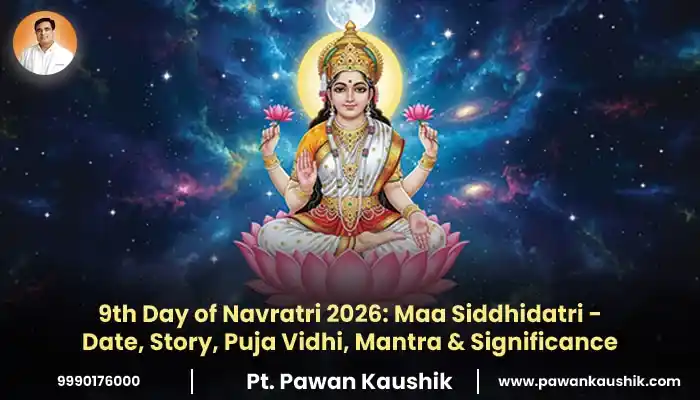 People worship the last form of Navdurga, Mata Siddhidatri, on the 9th day of Navratri or Navami. In 2026, Maha Navami of Shardiya Navratri falls on 19th October and ends (parana) on 20th of October in the afternoon. The day is significant as it concludes the grand festival and is observed with sincere devotion, prayers, mantra jaap and following the traditional rituals.
Devotees worship Maa Siddhidatri on the final day of Navratri to seek blessings for spiritual awakening and find peace in their lives. For all the relevant insights on the 9th day of Shardiya Navratri 2026, including the puja vidhi, colour, mantra, story, and about Mata Siddhidatri, follow this guide.
When is Maha Navami in 2026?
Below are the details for Shardiya Navratri Maha Navami 2026 date and time:The 9th day of Shardiya Navratri falls on 19 October 2026 and ends on 20 October 2026.
Maha Navami Tithi timing in 2026
- Navami tithi begins at 10:51 AM on Oct 19, 2026
- Navami tithi ends at 12:50 PM on Oct 20, 2026
About the 9th Day of Navratri Goddess: Who is Mata Siddhidatri?
Maa Siddhidatri is the last form of Bhagwati who is worshipped on the final day of Navratri. Siddhi refers to mystical & spiritual powers, while Datri means the giver; thus, the term Siddhidatri collectively means the bestower of siddhis. It ultimately means that Mata Siddhidatri blesses her devotees with spiritual enlightenment, wisdom, and perfection.Shiddhidatri Mata represents the final cosmic power and is the divine mother revered by all beings, including gods and humans. According to the scriptures, when all the gods were worshipping the goddess Durga on the final or ninth day, she manifested as Siddhidatri, who ensures that whenever the gods and goddesses need to save themselves from demons, she will be ready to protect them.
Day 9 of Shardiya Navratri is about manifestation and completion, where the prayers, rituals, and disciplines of the past 8 days culminate in results. It also aligns with the 9th day of Navratri’s goddess, who symbolises spiritual enlightenment and perfection after the destruction of evil power, intense penance, and fulfilment.
According to the sacred texts, the final form of Durga (Bhagwati), Siddhidatri, also grants siddhis to gods, and through her worship, lord Shiva attained cosmic power that led to the creation of “Ardhanarishvara”, where lord Shiva and Parvati’s Siddhidatri form are united as one.
Appearance of the Goddess Siddhidatri- 9th day of Navratri goddess
The Maha Navmi goddess, Devi Siddhidatri, is depicted sitting on a blooming lotus or sacred religious books. She has four arms: the right hand holds a chakra & gada (mace), while the upper left hand holds Shankha (conch shell) and the lower left hand holds a lotus.Siddhidatri Devi is often visualised wearing red attire, and in many pictorial depictions, the deity is seen flanked by gandharvas, yakshas, gods, demons, and Siddhas (spiritual beings) bowing respectfully before the deity.
Significance of Navratri Day 9
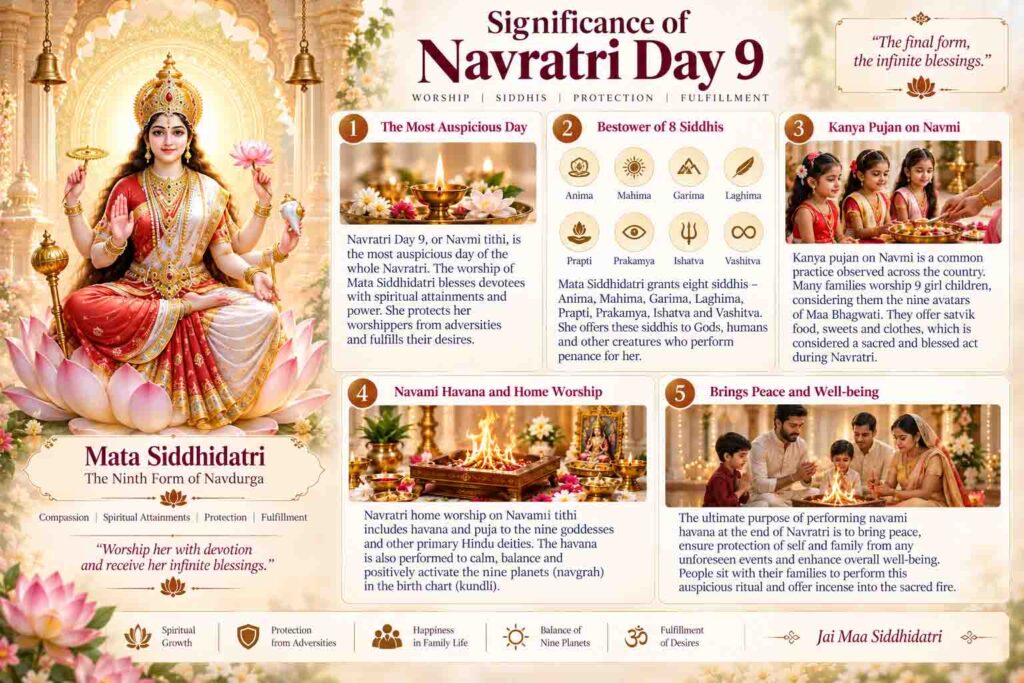 Shardiya Navratri day 9, or Navmi tithi, is the most auspicious day of the whole Navaratri, when the worship of Mata Siddhidatri blesses devotees with siddhis (spiritual attainments) and power. The deity protects her worshippers from adversities and fulfills their desires.
Mata Siddhidatri grants their devotees with siddhis (spiritual blessings), as she is the final avatar of Maa Durga. She is also known as the bestower or giver of 8 siddhis, including Anima, Mahima, Garima, Laghima, Prapti, Prakamya, Ishatva, and Vashitva, which she offers to Gods, humans and other creatures who perform penance for her.
Kanya pujan on Navmi is also a common practice observed across the country and in other places where the festival is held. Although this is mostly done on Ashtami, many people also observe it on day nine.
The ritual includes offering satvik food and sweets to kanya (female children), especially the Brahmins and pandits. Many families select 9 girl children, considering them the nine avatars of Maa Bhagwati. They offer sweets and clothes and also worship them, which is considered a sacred and blessed act during Navratri.
Navratri home worship is also a common ritual on Navratri Navami tithi, which includes havana and puja to the nine goddesses and other primary Hindu deities. The havana is also performed to calm, balance and positively activate the nine planets (navgarah) in the birth chart (kundli).
The ultimate purpose of performing navami havana at the end of Navaratri is to bring peace, ensure protection of self and family from any unforeseen events and enhance overall well-being. People sit with their families sit together to perform this auspicious ritual and offer incense into the sacred fire.
Astrological Significance of Maha Navami
Astrologically, Mata Siddhidatri is associated with the shadow planet Ketu. The deity controls and strengthens Ketu in the birth chart, which represents spirituality, tantra sadhana, and siddhis. Worshipping Mata Siddhidatri on day 9 of Navratri is also believed to overcome the negative influence of Ketu in life, which causes worldly detachment, sudden losses and confusion.Ninth Day of Navratri Story (Mata Siddhidatri Ki Katha)
Shardiya Navratri katha of day 9, or Mata Siddhidatri story, explains the cosmic power where gods also receive their siddhis from the deity. When there was nothing in the universe and only darkness existed, Maa Kushmanda created light with her radiant smile and dispelled the darkness.Kushmanda also created the trinity (tridev): Brahma (the creator), Vishnu (the preserver) and Shiva (the destroyer). Once, Lord Shiva worshipped the deity to ask for more perfection with her utmost blessings. Mata Kushmada created another goddess called Siddhidatri to fulfil the wishes of Lord Shiva. Siddhidatri not only blessed Shiva with all eight siddhis (Ashta Siddhis); she also gave him 10 more spiritual powers – a total of 18 siddhis.
Then something astonishing happened: half of his body was acquired by the feminine divine, where one of the forms of Mata Parvati (Siddhidatri) was incorporated into the half-body part of Shiva. This led to the creation of Ardhanarishwar, where the goddess Siddhidatri appears in the left half of Lord Shiva.
The creation of Ardhanarishwar signifies the importance of masculine and feminine energies for harmony in the universe.
9th Day of Navratri Colour
As per the panchang, the 9th day or navami colour of Shardiya Navaratri is Peacock green, which signifies richness, diversity, nature’s beauty, fulfilment and enlightenment. The colour is also called morpankhi in Hindi that reflects- divinity, knowledge and balance.What to Wear on Maha Navami 2026?
Although there is no compulsion for a particular dress code, each day of Navratri has a specific colour, and wearing that colour is believed to be auspicious to harness the blessings of that day’s deity. This year, a devotee should wear the colour of the navami tithi, which is peacock green (morpankhi), to match the vibe of the tithi and seek divine grace.Mata Siddhidatri Bhog: Special Offerings for the Deity on the 9th Day of Navratri
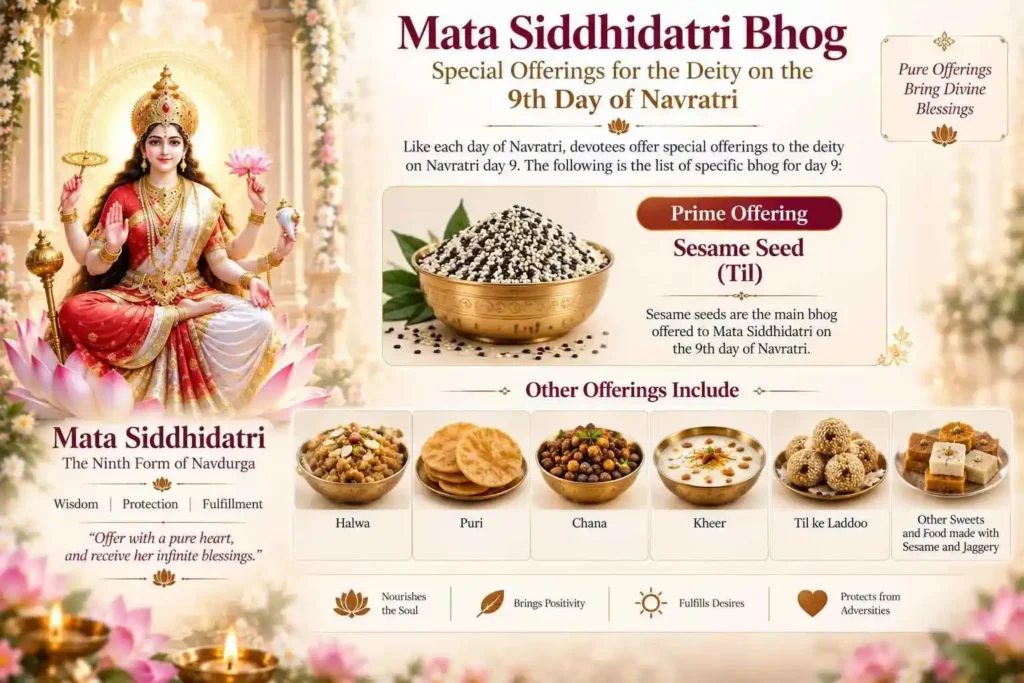 Like each day of Navratri, devotees offer special offerings to the deity on Navratri day 9. The following is the list of specific bhog for day 9 in 2026:
Prime offering: Sesame Seed (til)
Other offerings include: Halwa, puri, chana, kheer, and sweets and food made using sesame and jaggery, including til ke laddoo.
Shardiya Navratri Maha Navami and Maa Siddhidatri mantras
Here is the list of Mata Siddhidatri’s mantras a devotee should chant while worshipping her:Maa Siddhidatri beej mantra (Chant 108 times at once)
ॐ ऐं ह्रीं क्लीं सिद्धिदात्र्यै नमः॥Om Aim Hreem Kleem Siddhidatryai Namah.
Simple Mantra (Chant 108 times at once)
ॐ देवी सिद्धिदात्र्यै नमः॥Om Devi Siddhidatryai Namah॥
Prarthana
सिद्ध गन्धर्व यक्षाद्यैरसुरैरमरैरपि।सेव्यमाना सदा भूयात् सिद्धिदा सिद्धिदायिनी॥
Siddha Gandharva Yakshadyairasurairamarairapi।
Sevyamana Sada Bhuyat Siddhida Siddhidayini॥
Stuti
या देवी सर्वभूतेषु माँ सिद्धिदात्री रूपेण संस्थिता।नमस्तस्यै नमस्तस्यै नमस्तस्यै नमो नमः॥
Ya Devi Sarvabhuteshu Maa Siddhidatri Rupena Samsthita।
Namastasyai Namastasyai Namastasyai Namo Namah॥
Dhyana
वन्दे वाञ्छित मनोरथार्थ चन्द्रार्धकृतशेखराम्।कमलस्थिताम् चतुर्भुजा सिद्धीदात्री यशस्विनीम्॥
स्वर्णवर्णा निर्वाणचक्र स्थिताम् नवम् दुर्गा त्रिनेत्राम्।
शङ्ख, चक्र, गदा, पद्मधरां सिद्धीदात्री भजेम्॥
पटाम्बर परिधानां मृदुहास्या नानालङ्कार भूषिताम्।
मञ्जीर, हार, केयूर, किङ्किणि रत्नकुण्डल मण्डिताम्॥
प्रफुल्ल वन्दना पल्लवाधरां कान्त कपोला पीन पयोधराम्।
कमनीयां लावण्यां श्रीणकटिं निम्ननाभि नितम्बनीम्॥
Vande Vanchhita Manorathartha Chandrardhakritashekharam।
Kamalasthitam Chaturbhuja Siddhidatri Yashasvinim॥
Swarnavarnna Nirvanachakra Sthitam Navam Durga Trinetram।
Shankha, Chakra, Gada, Padmadharam Siddhidatri Bhajem॥
Patambara Paridhanam Mriduhasya Nanalankara Bhushitam।
Manjira, Hara, Keyura, Kinkini, Ratnakundala Manditam॥
Praphulla Vandana Pallavadharam Kanta Kapolam Pin Payodharam।
Kamaniyam Lavanyam Shrinakati Nimnanabhi Nitambanim॥
Stotra
कञ्चनाभा शङ्खचक्रगदापद्मधरा मुकुटोज्वलो।स्मेरमुखी शिवपत्नी सिद्धिदात्री नमोऽस्तुते॥
पटाम्बर परिधानां नानालङ्कार भूषिताम्।
नलिस्थिताम् नलनार्क्षी सिद्धीदात्री नमोऽस्तुते॥
परमानन्दमयी देवी परब्रह्म परमात्मा।
परमशक्ति, परमभक्ति, सिद्धिदात्री नमोऽस्तुते॥
विश्वकर्ती, विश्वभर्ती, विश्वहर्ती, विश्वप्रीता।
विश्व वार्चिता, विश्वातीता सिद्धिदात्री नमोऽस्तुते॥
भुक्तिमुक्तिकारिणी भक्तकष्टनिवारिणी।
भवसागर तारिणी सिद्धिदात्री नमोऽस्तुते॥
धर्मार्थकाम प्रदायिनी महामोह विनाशिनीं।
मोक्षदायिनी सिद्धीदायिनी सिद्धिदात्री नमोऽस्तुते॥
Kanchanabha Shankhachakragadapadmadhara Mukatojvalo।
Smeramukhi Shivapatni Siddhidatri Namoastute॥
Patambara Paridhanam Nanalankara Bhushitam।
Nalisthitam Nalanarkshi Siddhidatri Namoastute॥
Paramanandamayi Devi Parabrahma Paramatma।
Paramashakti, Paramabhakti, Siddhidatri Namoastute॥
Vishvakarti, Vishvabharti, Vishvaharti, Vishvaprita।
Vishva Varchita, Vishvatita Siddhidatri Namoastute॥
Bhuktimuktikarini Bhaktakashtanivarini।
Bhavasagara Tarini Siddhidatri Namoastute॥
Dharmarthakama Pradayini Mahamoha Vinashinim।
Mokshadayini Siddhidayini Siddhidatri Namoastute॥
Kavacha
ॐकारः पातु शीर्षो माँ, ऐं बीजम् माँ हृदयो।हीं बीजम् सदापातु नभो गृहो च पादयो॥
ललाट कर्णो श्रीं बीजम् पातु क्लीं बीजम् माँ नेत्रम् घ्राणो।
कपोल चिबुको हसौ पातु जगत्प्रसूत्यै माँ सर्ववदनो॥
Omkarah Patu Shirsho Maa, Aim Bijam Maa Hridayo।
Him Bijam Sadapatu Nabho Griho Cha Padayo॥
Lalata Karno Shrim Bijam Patu Klim Bijam Maa Netram Ghrano।
Kapola Chibuko Hasau Patu Jagatprasutyai Maa Sarvavadano॥
Aarti
जय सिद्धिदात्री माँ तू सिद्धि की दाता। तु भक्तों की रक्षक तू दासों की माता॥तेरा नाम लेते ही मिलती है सिद्धि। तेरे नाम से मन की होती है शुद्धि॥
कठिन काम सिद्ध करती हो तुम। जभी हाथ सेवक के सिर धरती हो तुम॥
तेरी पूजा में तो ना कोई विधि है। तू जगदम्बें दाती तू सर्व सिद्धि है॥
रविवार को तेरा सुमिरन करे जो। तेरी मूर्ति को ही मन में धरे जो॥
तू सब काज उसके करती है पूरे। कभी काम उसके रहे ना अधूरे॥
तुम्हारी दया और तुम्हारी यह माया। रखे जिसके सिर पर मैया अपनी छाया॥
सर्व सिद्धि दाती वह है भाग्यशाली। जो है तेरे दर का ही अम्बें सवाली॥
हिमाचल है पर्वत जहाँ वास तेरा। महा नन्दा मन्दिर में है वास तेरा॥
मुझे आसरा है तुम्हारा ही माता। भक्ति है सवाली तू जिसकी दाता॥
Benefits of Chanting Siddhidatri mantra
Chanting the mantras, prayers, and performing aarti of Maha Navmi goddess Siddhidatri blesses the devotees with divine protection and spiritual enlightenment. The deity is also believed to free her worshippers and devotees from ignorance and remove suffering in their lives.9th Day of Navratri Puja Vidhi Step-by-Step Details: Know How to Worship Deity Siddhidatri on Day 9
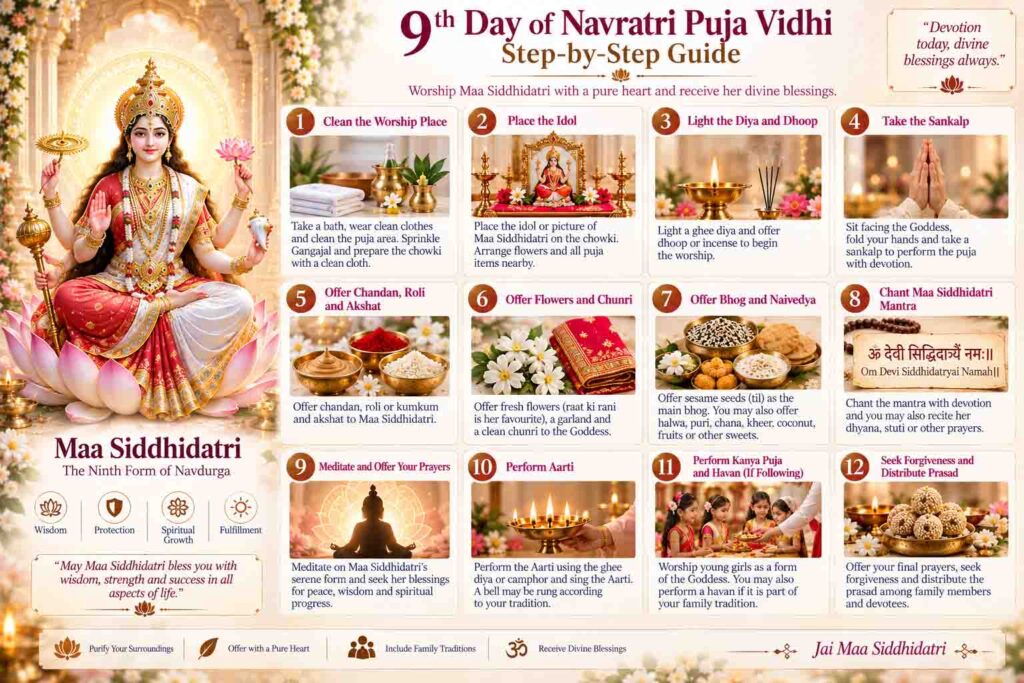 Devotees should follow the step-by-step Maa Siddhidatri puja vidhi on Maha Navmi to seek the blessings of the final form of Nav-Durga. Also, before worshipping the deity, you must ensure that all the required puja materials are available.
Maa Siddhidatri Puja Vidhi at Home: Step-by-Step Guide:
Step 1. Clean the Worship Place (Puja House or Space)
Wake up early in the morning, take a bath, and wear clean clothes. After that, clean the worship area of your house where you perform the day 9 puja. Sprinkle gangajal around the puja space for purification and then begin the Navratri worship.Begin the morning by taking a bath and wearing clean clothes. Clean the puja area and remove unnecessary items. You may sprinkle a little Gangajal around the worship space as part of the purification. Prepare the chowki and place a clean cloth over it.
Step 2. Place the Idol of Deity Siddhidatri
Place the idol of Mata Siddhidatri or Mata Durga in the centre (on the prepared chowki) . Arrange the flowers, diya, incense and other puja samagri nearby.Step 3. Light the Diya and Dhoop
Light a ghee diya before Maa Siddhidatri and offer dhoop or incense. Take a moment to settle your mind and begin the worship with devotion.Step 4. Take the Sankalp
Sit facing the Goddess, fold your hands and remember Maa Siddhidatri. Take a sankalp for the puja, stating your intention to perform the worship with devotion and seek the Goddess’s blessings.Step 5. Offer Chandan, Roli and Akshat
Offer chandan or sandalwood paste, roli or kumkum and akshat (unbroken rice) to Maa Siddhidatri according to your family tradition. If you are worshipping a picture, make the offerings symbolically.Step 6. Offer Flowers and Chunri
Offer fresh flowers to Maa Siddhidatri. Night-blooming jasmine (raat ki rani) is specifically listed as her favourite flower by Drik Panchang. You may also offer a flower garland and a clean chunri or cloth to the Goddess.Step 7. Offer Bhog and Naivedya
Offer sesame seeds (til) as the traditional Day 9 bhog associated with Maa Siddhidatri. You may also offer halwa, puri, chana, kheer, coconut, fruits or sattvik sweets according to your family and regional tradition.Step 8. Chant Maa Siddhidatri Mantra
After making the offerings, chant Maa Siddhidatri’s mantra with devotion:ॐ देवी सिद्धिदात्र्यै नमः॥
Om Devi Siddhidatryai Namah॥
You may also recite her dhyana, stuti or other prayers traditionally used in her worship. This mantra is specifically listed for Maa Siddhidatri by Drik Panchang.