+91 9990176000
 +91 9999097600
 CALENDAR 2026


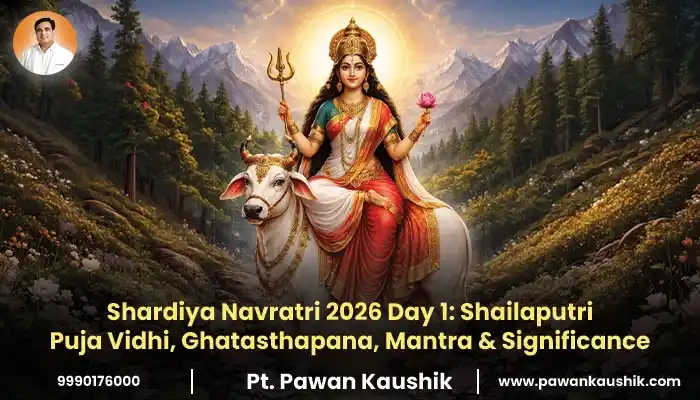 Shardiya Navratri marks the beginning of one of the most sacred festivals in Hinduism, celebrating the divine feminine energy of Maa Durga. Shardiya Navratri 2026 Day 1 is dedicated to Maa Shailaputri, the first among the Navadurga, and begins with the highly auspicious ritual of Ghatasthapana (Kalash Sthapana). This ritual symbolises inviting Goddess Durga into your home and commencing nine days of devotion, fasting, and spiritual practices.
If you are looking for the Navratri Day 1 date, Day 1 Navratri Goddess, Ghatasthapana significance, puja vidhi, mantra, bhog, and other important details, this guide covers everything you need to know.
Shardiya Navratri 2026 Day 1 Date
- Festival: Shardiya Navratri Day 1
- Date: 11 October 2026 (Sunday)
- Tithi: Ashwin Shukla Pratipada
- Day 1 Navratri Goddess: Maa Shailaputri
- Main Ritual: Ghatasthapana (Kalash Sthapana) & Shailaputri Puja
- Navratri Colour of the Day: Orange
Shardiya Navratri Ghatasthapana Muhurat
- Ghatasthapana Muhurat – 06:19 am to 10:12 am
- Duration – 03 Hours 52 Mins
- Ghatasthapana Abhijit Muhurat – 11:44 am to 12:31 pm
- Duration – 00 Hours 46 Mins
Navratri Day 1 Goddess – Maa Shailaputri
The Day 1 Navratri Goddess is Maa Shailaputri, the first manifestation of Goddess Durga. The name “Shailaputri” means Daughter of the Mountains (King Himalaya). She is regarded as the reincarnation of Goddess Sati and later appeared as Goddess Parvati.Maa Shailaputri rides Nandi (the bull) and carries a trident (Trishul) in one hand and a lotus in the other. She represents purity, determination, courage, and inner strength. In yogic philosophy, her worship is associated with the Muladhara (Root) Chakra, which symbolises stability, balance, and the beginning of one’s spiritual journey.
Worshipping Navratri Day 1 Goddess with devotion is believed to help devotees begin the nine-day festival with positive energy, faith, and spiritual strength.
Why Is Day 1 of Navratri Called Ghatasthapana?
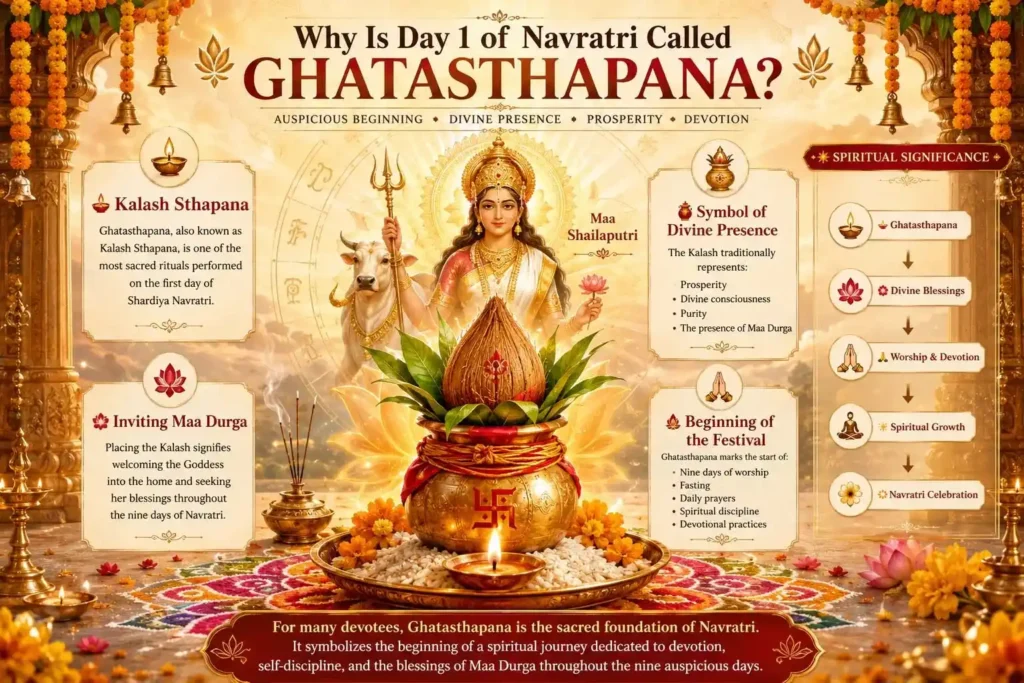 One of the most important rituals of Shardiya Navratri 2026 Day 1 is Ghatasthapana, also known as Kalash Sthapana.
The Kalash represents prosperity, divine consciousness, and the presence of Goddess Durga. Establishing it on the first day signifies inviting the Goddess into your home and seeking her blessings throughout Navratri.
It also marks the beginning of nine days of worship, fasting, prayers, and self-discipline. For many devotees, Ghatasthapana is the foundation of the entire Navratri celebration.
Ghatasthapana (Kalash Sthapana) Puja Vidhi
Performing Ghatasthapana with devotion is considered highly auspicious. You can follow these simple steps:Required Puja Samagri
- Kalash (copper, brass, or clay)
- Gangajal or clean water
- Mango leaves
- Coconut
- Red cloth
- Mauli (sacred thread)
- Rice (Akshat)
- Turmeric and Kumkum
- Betel nut (Supari)
- Coins
- Barley seeds (Jau)
- Earthen pot or tray with clean soil
- Diya, incense sticks, flowers, fruits, and sweets
- Idol or image of Maa Shailputri
Puja Vidhi
- Clean the puja area and spread a clean red or yellow cloth.
- Fill a tray with clean soil and sow barley seeds.
- Fill the Kalash with water, add Akshat, Supari, coins, and a little Gangajal.
- Tie the Mauli around the Kalash and place mango leaves on its mouth.
- Place a coconut wrapped in a red cloth over the Kalash.
- Invoke Maa Durga by taking a Sankalp (resolution) and offering flowers.
- Light a diya and incense, chant the Shailaputri mantra, and perform the aarti.
Maa Shailaputri Mantra
The simplest and most commonly chanted mantra on Navratri Day 1 is:ॐ देवी शैलपुत्र्यै नमः।
Om Devi Shailaputryai Namah
Chanting this mantra with devotion is believed to invoke the blessings of Maa Shailaputri for courage, stability, peace, and spiritual progress.
Navratri Day 1 Colour and Bhog
Navratri Day 1 Colour – Orange
The orange colour represents enthusiasm, positivity, and new beginnings. Wearing orange-coloured clothes on the first day is believed to symbolise optimism and spiritual energy.Bhog for Maa Shailaputri
Devotees generally offer:- Pure desi ghee
- Fresh fruits
- Milk-based sweets
- Mishri
- Seasonal fruits
Spiritual Significance of Shardiya Navratri Day 1
Every day of Navratri carries its own spiritual importance, and the first day sets the tone for the entire festival.The worship of Maa Shailaputri reminds us to begin every new journey with faith, patience, and determination. Just as Ghatasthapana establishes the divine presence at home, the first day also inspires us to build a strong spiritual foundation within ourselves.
Many devotees also begin their Navratri fast, recite Durga Saptashati, visit Durga temples, and dedicate time to prayer and meditation from this day onwards.
Simple Puja for Those with Limited Time
If you are unable to perform the complete ritual, you can still seek Maa Shailaputri’s blessings through a simple daily worship.- Wake up early and take a bath.
- Light a ghee diya before Maa Durga.
- Offer fresh flowers and fruits.
- Chant Om Devi Shailaputryai Namah 11, 21, or 108 times.
- Read a short Durga prayer or perform an evening aarti.
- Visit a nearby Durga temple if possible.
Do’s and Don’ts for Navratri Day 1
Do’s
- Perform Ghatasthapana during the auspicious muhurat.
- Wear clean clothes, preferably in the day’s auspicious colour.
- Offer fresh flowers, fruits, and satvik bhog to the deity.
- Chant Maa Shailaputri’s mantra with devotion.
- Maintain cleanliness in the puja area.
- Water the barley seeds daily after Kalash Sthapana.
Don’ts
- Avoid non-vegetarian food, alcohol, onion, and garlic during the fast.
- Do not disturb or move the Kalash once it has been established.
- Avoid arguments, negative speech, and impure thoughts during the festival.
- Do not delay Ghatasthapana beyond the prescribed muhurat.