know about chaitra navratri day 1 of shailputri mata Chaitra Navratri marks the beginning of the Hindu New Year and is considered one of the most spiritually powerful festival as per hindu tradition. The 1st day of Chaitra Navratri is dedicated to Shailputri Mata, the first and foundational form of Goddess Durga. Her worship sets the spiritual tone for the entire nine-day festival and helps devotees begin Navratri with purity, stability, and inner strength. In 2026 1st day of Chaitra Navratri falls on 19th March, 2026 which begins with Ghatasthapana, a sacred ritual that marks the formal beginning of Navratri and the invocation of Goddess Shakti into the puja space. It symbolizes the establishment of divine energy, purity, and spiritual stability for the entire nine-day worship.

In 2026, Chaitra Navratri once again offers an opportunity to reconnect with divine energy, awaken inner discipline, and build a strong spiritual foundation through devotion to Maa Shailputri.

Chaitra Navratri 2026 Ghatasthapana Date and Time

Chaitra Navratri 2026 begins with Ghatasthapana, the sacred ritual that marks the invocation of Goddess Shakti and sets the spiritual foundation for the nine-day festival. Below are the important date and timing details, presented clearly for devotees’ convenience:
  • Chaitra Navratri Ghatasthapana Date: Thursday, 19 March 2026 (Thrusday)
  • Ghatasthapana Muhurat: Early morning from 06:52 AM to 07:43 AM
  • Abhijeet Muhurat (Alternative Time): Afternoon from 12:05 PM to 12:53 PM
  • Pratipada Tithi Begins: 06:52 PM on 19 March 2026
  • Pratipada Tithi Ends: 04:52 PM on 20 March 2026
  • Meena Lagna Begins: 06:26 AM on 19 March 2026
  • Meena Lagna Ends: 07:43 AM on 19 March 2026
Performing Ghatasthapana within the recommended muhurat is believed to invite divine stability, prosperity, and uninterrupted blessings throughout Chaitra Navratri.

Who Is Maa Shailputri?

Shailputri Mata, also known as Mata Shailputri or Devi Shailputri, is the first manifestation of Goddess Durga. The name “Shailputri” is derived from two Sanskrit words — Shail meaning mountain and Putri meaning daughter — signifying her identity as the daughter of the Himalayas.

She is revered as the earthly incarnation of Goddess Sati, who was reborn as Parvati to reunite with Lord Shiva. As the first Navratri goddess, Maa Shaiputri represents strength rooted in calmness, devotion balanced with discipline, and stability that supports spiritual growth.

Her worship on the first day signifies the beginning of the seeker’s inner journey.

Also check out our thoughts on 9 Special Bhog Offered During Navratri

Significance of the 1st Day of Chaitra Navratri

The 1st day of Chaitra Navratri is not just ceremonial; it carries deep spiritual meaning. This day symbolises the laying of a strong inner foundation before progressing toward higher spiritual awareness during the coming days of Navratri.

significance of the day 1 of chaitra navratri shailputri mata
Worshipping Shailputri Mata on this day helps devotees:
  • Establish mental and emotional stability
  • Begin spiritual practices with discipline and clarity
  • Remove fear, hesitation, and inner imbalance
  • Prepare the mind and body for deeper sadhana
Navratri begins with grounding, not intensity — and Maa Shailputri embodies that grounding energy.

astro-vastu-cta

Maa Shailputri Ki Katha (Story of Devi Shailputri)

The story of Maa Shailputri ki Katha begins with her previous birth as Goddess Sati, the daughter of King Daksha. Despite marrying Lord Shiva against her father’s wishes, Sati remained devoted to her husband. When Daksha organised a grand yagna and intentionally insulted Shiva, Sati could not bear the humiliation of her divine consort and sacrificed herself in the sacred fire.

In her next birth, she was born as Parvati, the daughter of the Himalayas, and came to be known as Shailputri Mata. Through intense penance and devotion, she reunited with Lord Shiva, symbolising the eternal union of Shakti and Shiva.

This story teaches sacrifice, unwavering devotion, and the power of spiritual perseverance — values that form the essence of the first day of Navratri.

Appearance and Symbolism of Shailputri Mata

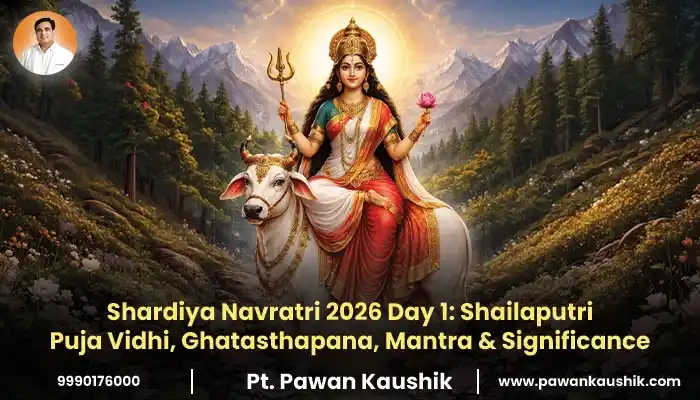
Devi Shaiputri is depicted riding a bull, symbolising patience, strength, and righteousness. She holds a trident in one hand, representing protection and the destruction of negativity, and a lotus in the other, symbolising purity and spiritual awakening. A crescent moon on her forehead reflects calmness, emotional balance, and divine grace.

Her form reminds devotees that true strength is steady, composed, and rooted in faith.

1st Day Navratri Colour and Its Meaning

The first day of Chaitra Navratri is traditionally associated with the colour yellow — a warm and auspicious hue that reflects optimism, enthusiasm, and new beginnings. Yellow is considered ideal for this day as it represents:
  • Joy and positivity: Encourages a cheerful mindset as the festival begins
  • Clarity and wisdom: Helps calm the mind and supports focused devotion
  • Prosperity and energy: Symbolises spiritual growth and inner illumination
Wearing yellow on the 1st day of Navratri is believed to align the devotee’s energy with the vibrant and uplifting essence of Maa Shailputri, helping create a joyful and spiritually receptive atmosphere right from the start of Chaitra Navratri 2026.

Bhog for Maa Shailputri: 1st Day of Navratri

Offering bhog on the first day of Navratri is a symbolic act of devotion, where food is prepared in its purest sattvic form and offered to Maa Shailputri with faith and gratitude. The bhog should be simple, nourishing, and free from tamasic ingredients.

Traditionally accepted and widely followed bhog options for the 1st day of Chaitra Navratri include:

Ghee (Clarified Butter):
Pure ghee is considered the most important offering for Maa Shailputri. It represents nourishment, strength, and vitality and is believed to support physical and emotional stability.

Milk and Milk-Based Preparations:
Milk, curd, or lightly sweetened milk dishes symbolise purity and maternal energy. These offerings align with the calm and grounding nature of the Goddess.

Fruits (Seasonal and Fresh):
Fresh fruits are offered as they are natural, light, and sattvic, making them ideal for vrat observance and divine offering.

Sweet Preparations Suitable for Vrat:
If kheer is offered, it should be prepared without rice or wheat. Instead, devotees may use:
  • Sabudana (sago)
  • Makhana (fox nuts)
  • Singhara (water chestnut flour)
This ensures the bhog remains vrat-compliant while retaining its devotional significance.

These offerings collectively symbolize purity, nourishment, gratitude, and the intention to begin Navratri with discipline and simplicity. More than the variety of food, it is the sincerity and devotion behind the offering that pleases Maa Shailputri.

Maa Shailputri Puja Vidhi (At Home)

On the first day of Chaitra Navratri, devotees begin their worship with Ghatasthapana, followed by the dedicated puja of Maa Shailputri, the first form of Goddess Durga. This ritual marks the formal invocation of divine Shakti and sets the spiritual direction for the entire Navratri period.

The puja should be performed with purity, discipline, and devotion, preferably during the auspicious muhurat.

Step-by-Step Maa Shailputri Puja Vidhi

Purification and Preparation
Begin the day with an early morning bath and wear clean, preferably yellow or light-coloured clothes. Clean the puja area thoroughly to maintain a sattvic and peaceful environment.

Ghatasthapana (Kalash Sthapana)
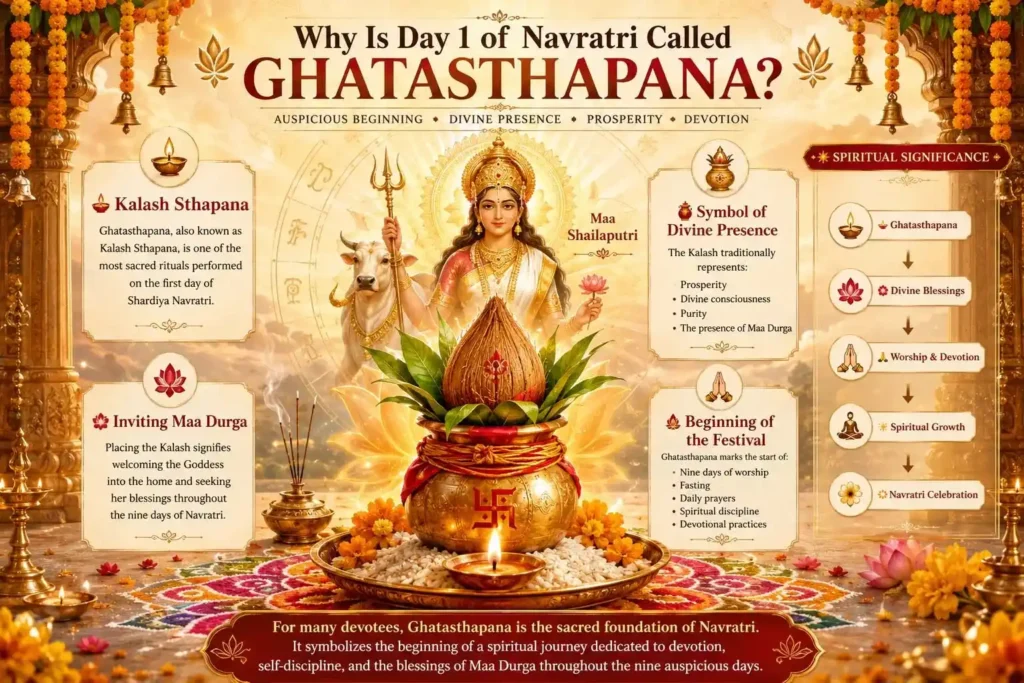
Place a clay or copper pot filled with clean water on a bed of grains or soil. Add sacred items such as Gangajal, turmeric, akshat (unbroken rice), and a coin inside the Kalash. Place mango leaves around its mouth and cover it with a coconut wrapped in red cloth. This Kalash represents the presence of Goddess Shakti.

Installation of Maa Shailputri
Place an idol or picture of Maa Shailputri near the Kalash. Light a ghee diya and incense sticks to create a devotional atmosphere.

Invocation and Sankalp
Close your eyes and take a sankalp (intention) for the Navratri vrat, seeking strength, stability, and spiritual growth. Mentally invoke Maa Shailputri and request her presence during the puja.

Offering of Panchopchar
Offer flowers like chameli, kumkum, akshat, fruits, and bhog to the Goddess. Ghee and milk-based offerings are considered especially auspicious for Maa Shailputri.

Mantra Japa and Prayer
Chant the Maa Shailputri mantra with devotion. Repetition of the mantra helps calm the mind and awaken inner strength. Devotees may chant the mantra 11, 21, or 108 times based on their capacity.

Recitation of Katha and Stuti
Read or listen to Maa Shailputri ki Katha to understand her divine form and spiritual significance. This step deepens devotion and strengthens emotional connection with the Goddess.

Aarti and Meditation
Perform Maa Shailputri Aarti and spend a few moments in silent meditation, focusing on the Muladhara (Root) Chakra to invoke stability, courage, and grounding energy.

Prasad Distribution
Conclude the puja by distributing prasad among family members and maintaining a positive, disciplined mindset throughout the day.

Also check out our thoughts on 2nd Day of Navratri

Maa Shailputri Mantra and Its Importance

Chanting the mantras of Maa Shailputri on the first day of Chaitra Navratri helps the devotee begin the spiritual journey with calmness, stability, and inner strength. As the presiding deity of the Muladhara (Root) Chakra, Maa Shailputri’s mantras are believed to ground restless thoughts, remove fear and emotional imbalance, and create a strong foundation for spiritual growth.

Reciting these sacred verses with devotion purifies the mind, strengthens faith, and invites divine protection and clarity into life. Below are the important mantras, prayers, and hymns associated with Maa Shailputri, traditionally recited during her worship.

Maa Shailputri Mantra

ॐ देवी शैलपुत्र्यै नमः॥

Om Devi Shailputryai Namah॥

(Mula Mantra – Chant with devotion and mental focus) (Chant 108 times at once)

This mantra invokes the gentle yet powerful energy of Maa Shailputri and is chanted to seek stability, courage, and spiritual grounding.

Shri Shailputri Prarthana

वन्दे वाञ्छितलाभाय चन्द्रार्धकृतशेखराम्।
वृषारूढां शूलधरां शैलपुत्रीं यशस्विनीम्॥

Vande Vanchhitlaabhaya Chandrardhakrit Shekharaam।
Vrisharoodhaam Shooldharaam Shailputrim Yashasvinim॥

This prayer praises Maa Shailputri as the giver of desired blessings, adorned with the crescent moon and riding the bull, symbolising strength, balance, and divine grace.

Shri Shailputri Stuti

या देवी सर्वभूतेषु माँ शैलपुत्री रूपेण संस्थिता।
नमस्तस्यै नमस्तस्यै नमस्तस्यै नमो नमः॥

Ya Devi Sarvabhooteshu Maa Shailputri Roopen Sansthita।
Namastasyai Namastasyai Namastasyai Namo Namah॥

Through this stuti, the devotee acknowledges Maa Shailputri’s presence in all beings and offers repeated salutations to her universal form.

Shri Shailputri Dhyan

वन्दे वाञ्छितलाभाय चन्द्रार्धकृतशेखराम्।
वृषारूढां शूलधरां शैलपुत्रीं यशस्विनीम्॥
पूणेन्दु निभाम् गौरी मूलाधार स्थिताम् प्रथम दुर्गा त्रिनेत्राम्।
पटाम्बर परिधानां रत्नाकिरीटा नामालंकार भूषिता॥
प्रफुल्ल वन्दना पल्लवाधरां कान्त कपोलाम् तुगम् कुचाम्।
कमनीयां लावण्यां स्नेमुखी क्षीणमध्यां नितम्बनीम्॥

Vande Vanchhitlaabhaya Chandrardhakrit Shekharaam।
Vrisharoodhaam Shooldharaam Shailputrim Yashasvinim॥

Poornendu Nibhaam Gauri Mooladhar Sthitaam Pratham Durga Trinetramaam।
Pataambar Paridhaanam Ratnaakirita Naamalaankaar Bhooshitaam॥

Praphulla Vandana Pallavaadharaam Kaant Kapolaam Tugam Kucham।
Kamaneeyaam Laavanyaam Snehmukheem Ksheenamadhyaam Nitambineem॥

This meditation verse helps devotees visualise Maa Shailputri in her divine form, seated in the Muladhara Chakra, radiating purity, beauty, and protective strength. It is especially beneficial for inner stillness and focus.

Shri Shailputri Stotra

प्रथम दुर्गा त्वंहि भवसागरः तारणीम्।
धन ऐश्वर्य दायिनी शैलपुत्री प्रणमाम्यहम्॥
त्रिलोजननी त्वंहि परमानन्द प्रदीयमान्।
सौभाग्यरोग्य दायिनी शैलपुत्री प्रणमाम्यहम्॥
चराचरेश्वरी त्वंहि महामोह विनाशिनीं।
मुक्ति भुक्ति दायिनीं शैलपुत्री प्रणमाम्यहम्॥

Pratham Durga Twam Hi Bhavsagarah Taarineem।
Dhan Aishwarya Daayini Shailputri Pranamaamyaham॥

Trilojanini Twam Hi Paramaanand Pradeeyamaan।
Saubhaagya Rogya Daayini Shailputri Pranamaamyaham॥

Charachareshwari Twam Hi Mahamoh Vinaashineem।
Mukti Bhukti Daayineem Shailputri Pranamaamyaham॥

This stotra glorifies Maa Shailputri as the first Durga, the one who guides devotees across life’s difficulties and blesses them with prosperity, health, happiness, and liberation.

Shri Shailputri Kavach

ॐकारः में शिरः पातु मूलाधार निवासिनी।
हींकारः पातु ललाटे बीजरूपा महेश्वरी॥
श्रींकार पातु वदने लावण्या महेश्वरी।
हुंकार पातु हृदयम् तारिणी शक्ति स्वघृत।
फट्कार पातु सर्वाङ्गे सर्व सिद्धि फलप्रदा॥

Omkaarah Me Shiro Paatu Mooladhar Nivaasini।
Heenkaarah Paatu Lalaate Beejroopa Maheshwari॥

Shreemkaara Paatu Vadane Laavanya Maheshwari।
Humkaara Paatu Hridayam Taarini Shakti Swagrihit॥

Phatkaara Paatu Sarvaange Sarva Siddhi Phalprada॥

The kavach is a protective hymn that seeks Maa Shailputri’s divine shield over the devotee’s body, mind, and soul, offering spiritual safety and inner confidence.

Shailputri Mata Ki Aarti

Performing Shailputri Mata Aarti or Maa Shailputri Aarti in the morning or evening completes the worship ritual. Aarti symbolises surrender, gratitude, and devotion. Listening or singing the aarti with full attention enhances spiritual connection and emotional peace.

Here are the Mata Shailputri Aarti

शैलपुत्री माँ बैल असवार। करें देवता जय जय कार॥

शिव-शंकर की प्रिय भवानी। तेरी महिमा किसी ने न जानी॥

पार्वती तू उमा कहलावें। जो तुझे सुमिरे सो सुख पावें॥

रिद्धि सिद्धि प्रदान करे तू। दया करें धनवान करें तू॥

सोमवार को शिव संग प्यारी। आरती जिसने तेरी उतारी॥

उसकी सगरी आस पुजा दो। सगरे दुःख तकलीफ मिटा दो॥

घी का सुन्दर दीप जला के। गोला गरी का भोग लगा के॥

श्रद्धा भाव से मन्त्र जपायें। प्रेम सहित फिर शीश झुकायें॥

जय गिरराज किशोरी अम्बे। शिव मुख चन्द्र चकोरी अम्बे॥

मनोकामना पूर्ण कर दो। चमन सदा सुख सम्पत्ति भर दो॥

Shailputri Maa Bail Asavaar। Karen Devta Jai Jai Kaar॥
Shiv-Shankar Ki Priya Bhawani। Teri Mahima Kisi Ne Na Jaani॥

Parvati Tu Uma Kahalaave। Jo Tujhe Sumire So Sukh Paave॥
Riddhi Siddhi Pradaan Kare Tu। Daya Kare Dhanwaan Kare Tu॥

Somvaar Ko Shiv Sang Pyaari। Aarti Jisne Teri Utaari॥
Uski Sagri Aas Pooja Do। Sagre Dukh Takleef Mita Do॥

Ghee Ka Sundar Deep Jala Ke। Gola Gari Ka Bhog Laga Ke॥
Shraddha Bhaav Se Mantra Japayein। Prem Sahit Phir Sheesh Jhukayein॥

Jai Giriraj Kishori Ambe। Shiv Mukh Chandra Chakori Ambe॥
Manokamna Poorn Kar Do। Chaman Sada Sukh Sampatti Bhar Do॥

Chakra and Planetary Association of Maa Shailputri

Maa Shailputri is associated with the Muladhara (Root) Chakra, which governs stability, security, and survival instincts. Awakening this chakra helps devotees feel grounded, confident, and emotionally balanced.

Astrologically, she is linked with the Moon, influencing emotions and mental peace. Her worship helps reduce emotional turbulence and promotes harmony in relationships and family life.

Spiritual Benefits of Worshipping Shailputri Mata

Worship of Shailputri Mata on the first day of Chaitra Navratri offers both spiritual and practical benefits. It helps stabilise emotions, strengthen determination, and create a peaceful mental state. Devotees often experience clarity, courage, and renewed faith after sincere worship.

This day is especially beneficial for those seeking emotional balance, inner discipline, and a steady spiritual path.

Key Benefits of Shailputri Mata Puja

  • Reduces emotional imbalance caused by the Moon (Chandra), helping the mind become calm, composed, and emotionally steady.
  • Creates inner peace and mental clarity, allowing devotees to begin Navratri with a settled and positive mindset.
  • Protects from negativity and mental disturbances, especially those arising from fear, stress, or instability.
  • Improves harmony in relationships, particularly by nurturing patience, emotional understanding, and mutual respect.
  • Supports stability in career and responsibilities, encouraging disciplined effort rather than impulsive decisions.
  • Activates the Muladhara (Root) Chakra, strengthening feelings of security, grounding, and inner confidence.
  • Instills discipline and sincerity in Navratri vrat, helping devotees follow spiritual practices with focus and devotion.
Also check out our thoughts on Nine forms of the Goddess

big change in your life Astrology cta

Conclusion

Chaitra Navratri is a journey of transformation, and it begins with grounding the soul. Worshipping Maa Shailputri on the first day helps devotees establish strength rooted in calmness and devotion anchored in discipline. By offering sincere prayers, chanting the maa shailputri mantra, performing puja, and understanding her divine symbolism, one lays a strong foundation for the entire Navratri period and get Mata Shailputri’s blessings.

May Shailputri Mata bless you with stability, clarity, and inner strength during Chaitra Navratri 2026.