+91 9990176000
 +91 9999097600
 CALENDAR 2026


 Makar Sankranti is one of India’s most important festivals, marking the sacred transition (gochar) of the Sun into Capricorn (Makara Rashi). As we approach Makar Sankranti 2026, people across India prepare to celebrate this highly auspicious day with devotion, gratitude and cultural rituals.
If you are searching for what is Makar Sankranti, why Makar Sankranti is celebrated, Makar Sankranti meaning, or Makar Sankranti 2026 date and time, this detailed guide covers everything you need to know about the festival — its history, muhurat, food, rituals, and its spiritual significance.
When is Makar Sankranti in 2026?
As the festival is approaching, people search for the Makar Sankranti 2026 date and time. Below is the list of Makar Sankranti Muhurat details along with the date:- Like every year, Makar Sankranti will be celebrated on 14 January 2026.
- Punya Kal Timing: 3:13 pm to 5: 45 pm. (Duration- 02 hours 32 minutes).
- Maha Punya Kal timing: 3:13 pm to 04: 58 pm. (Duration- 1 hour 45 minutes).
- The festival is observed when the Sun enters Capricorn, marking the beginning of Uttarayana, a highly auspicious six-month period.
What Is Makar Sankranti? (Makar Sankranti Meaning)
Makar Sankranti is a Solar festival that marks: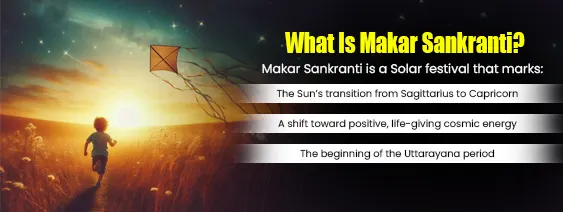
- The Sun’s transition from Sagittarius to Capricorn
- The start of longer days
- The beginning of the Uttarayana period
- A shift toward positive, life-giving cosmic energy
Also check out our thoughts on How to Wear Rudraksha
Why Makar Sankranti Is Celebrated
People often wonder why Makar Sankranti is celebrated. The festival marks a solar movement, when the Sun enters the zodiac sign of Capricorn (Makar). The reasons are connected to culture, agriculture, and ancient wisdom, which are as follows:Beginning of Uttarayana
Makar Sankranti marks the start of Uttarayana, the Sun’s sacred northward movement.According to the scriptures, this phase is considered highly auspicious because the Sun begins to move closer to Earth, increasing warmth, vitality and life-supporting energy. Uttarayana is believed to bring opportunities for spiritual growth, clarity of mind and renewed strength.
Harvest Festival
Across India, Makar Sankranti is celebrated as a joyous harvest festival.It is the time when farmers bring home their hard-earned crops and offer gratitude to Mother Earth, nature and the Sun for nourishment. Communities come together to celebrate abundance, prosperity and the completion of the agricultural cycle.
Spiritual Importance
Makar Sankranti is regarded as one of the most sacred days for spiritual practices.Taking a holy bath in rivers, offering Arghya to the Sun, chanting mantras and performing charity (daan) are believed to cleanse past karmas and attract divine blessings. The festival encourages self-discipline, gratitude and inner transformation.
End of Winter & Beginning of Longer Days
One of the most important aspects of Makar Sankranti is the end of harsh winter and the gradual increase in daylight. From this day onward, days start getting longer and nights shorter, symbolizing the arrival of renewed hope, clarity and life-supporting energy. This shift also marks the transition from cold, dense energy to warmth, activity and rejuvenation.Symbol of Light Over Darkness
As the Sun begins its northward journey, the duration of daylight slowly increases.This shift symbolizes the victory of light over darkness, knowledge over ignorance, and hope over stagnation. Makar Sankranti inspires people to leave behind negativity, embrace positivity and step into a new phase of clarity and enthusiasm.
Importance of Makar Sankranti
The importance of Makar Sankranti is reflected in both spiritual and practical aspects of life:- Good for new beginnings
- Ideal day for daan (charity)
- Excellent for Surya puja and spiritual growth
- Best for cleansing, fasting and discipline
- Promotes gratitude and harmony within communities
Significance of Makar Sankranti
The significance of Makar Sankranti is rooted in Vedic astrology. Surya’s entry into Capricorn, ruled by Saturn, represents:- Balance of discipline (Saturn) and vitality (Sun)
- Strengthening of karma
- Removal of obstacles
- Enhancement of personal power
Makar Sankranti History
Understanding Makar Sankranti history reveals beautiful cultural and mythological connections:- As per ancient texts, Bhishma Pitamah chose Uttarayana as the sacred time to leave his body.
- The day is associated with Surya Dev and Shani Dev, symbolizing harmony between father and son.
- Historically, it is tied to the beginning of harvest season, marking abundance and prosperity.
- Old scriptures mention that a holy dip on this day absolves sins and brings spiritual progress.
Makar Sankranti Puja: Rituals and Traditions
Here is how the Makar Sankranti puja is traditionally performed:Holy Bath
The day begins with a sacred bath at sunrise, symbolizing purification of the body, mind and karma. Holy rivers like Ganga, Yamuna, Godavari and Narmada are considered especially auspicious, but even bathing at home with clean, mindful intention is believed to cleanse past negativity and prepare the devotee for Surya puja.Surya Arghya
After the bath, devotees stand facing the rising Sun and offer Arghya (water mixed with sesame, also called til). This ritual expresses gratitude to Surya Dev, the giver of energy, health, and life. The rays of the morning sun, combined with water, symbolize purification, strength and clarity.Daan (Charity)
Charity is one of the most important aspects of Makar Sankranti. Donating til (sesame), gur (jaggery), blankets, grains, utensils, and clothes to the needy is believed to bring divine blessings and reduce karmic burdens.Til-Gur Rituals and Exchange of Sweets
Families share sweets made of sesame and jaggery to spread warmth and goodwill.In Maharashtra, the phrase “Til-gul ghyaa, goad goad bola” is used during the festival, which means “Accept this sweet and speak kindly.” The idea behind this tradition is to encourage harmony, let go of bitterness, and start the new season with sweetness in relationships.
Lighting Diyas and Performing Havan
Lighting diyas and performing a small havan is believed to purify the home and mind. Fire symbolizes clarity, protection, and transformation. This ritual helps remove stagnant or negative energy and invites fresh, positive vibrations as the Sun begins its northward journey.Preparing and Eating Sattvic Food
Simple, sattvic foods like khichdi, til ladoo, gur chikki, Pongal and sesame preparations are made on this day. These foods keep the body warm, improve digestion and support inner balance during the winter season. Eating light and pure food also reflects the festival’s theme of simplicity and spiritual clarity.Offering Gratitude and Family Prayers
Families sit together, offer prayers and express gratitude for the harvest and blessings in their lives. This practice strengthens unity, brings emotional warmth and reinforces the values of peace, abundance and togetherness that Makar Sankranti stands for.Makar Sankranti Food
Food plays a central role in the festival. Popular Makar Sankranti food items include: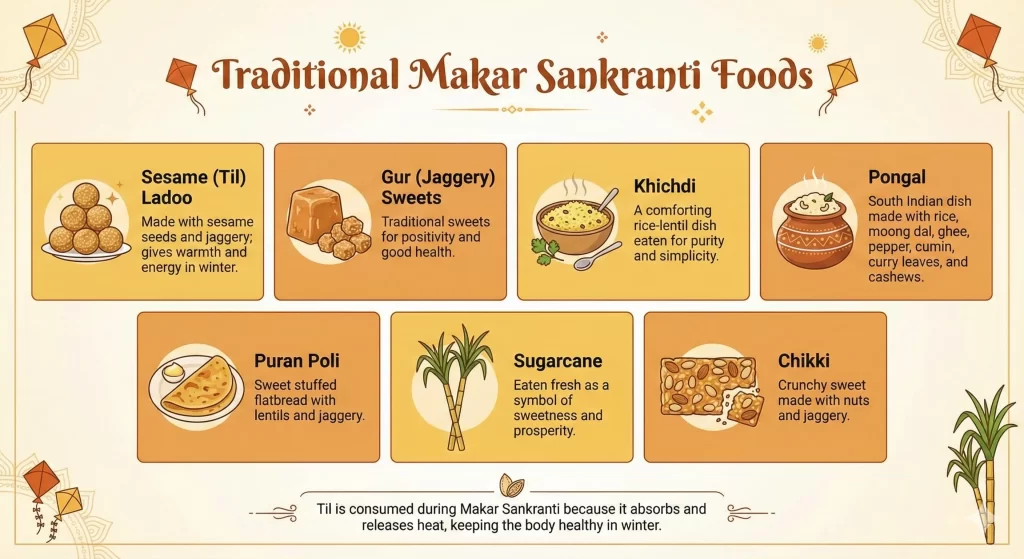
- Sesame (til) ladoo
- Gur (jaggery) sweets
- Khichdi
- Pongal (Made with rice, moong dal, ghee, pepper, cumin, curry leaves and cashews)
- Puran poli (sweet stuffed flatbread made with lentils and jaggery )
- Sugarcane
- Chikki
Makar Sankranti Festival Is Celebrated in Which State?
If you are wondering Makar Sankranti festival is celebrated in which state, here’s the answer:Makar Sankranti is celebrated across all Indian states, but with different names:
Punjab – Maghi
Celebrated with bonfires, rituals, and traditional foods.Gujarat – Uttarayan
Known for the world-famous kite festival.Maharashtra – Makar Sankranti
Celebrated with til-gur, haldi-kumkum, and family rituals.Tamil Nadu – Pongal (4-day festival)
A major harvest celebration with traditional Pongal dishes.Karnataka – Sankranti / Ellu-Bellu
People exchange a special mixture of sesame, jaggery, and coconut.Assam – Magh Bihu
Celebrated with community feasts, bonfires (Meji), and traditional games.Uttar Pradesh – Makar Sankranti
Observed with holy baths, charity, and khichdi offerings.Bihar – Makar Sankranti (Tilkut & Khichdi Festival)
In Bihar, it is also called Makar Sankranti, and people prepare tilkut, lai, dahi-chura, and khichdi as traditional Sankranti foods.West Bengal – Poush Sankranti / Ganga Sagar Mela
Marked by holy dips, Pithe-Puli sweets, and the famous Sagar Island fair.Each state celebrates the festival with unique cultural traditions, foods and rituals.
Regional Celebrations Across India
Gujarat – Uttarayan & Kite Festival
The sky fills with colorful kites symbolizing freedom and optimism.Tamil Nadu – Pongal
A four-day harvest festival honoring Sun, animals and nature.Maharashtra – Tila Gul
Women exchange sweets and blessings for goodwill.Bengal – Ganga Sagar Mela
Lakhs of devotees take a holy dip where the Ganga meets the sea.Punjab – Maghi
Bonfires, prayers and festive meals mark the celebration.Also check out our thoughts on What is 7 Mukhi Rudraksha and Benefits of 7 Mukhi Rudraksha

Conclusion
Makar Sankranti 2026 is a festival of light, gratitude, discipline and new beginnings.From performing Surya puja to preparing traditional foods and celebrating regional customs, the festival connects people across India with joy and spiritual upliftment.
Whether you want to understand Makar Sankranti meaning, its rituals, its history or Makar Sankranti 2026 muhurat, this guide offers everything you need to celebrate with devotion and awareness.