+91 9990176000
 +91 9999097600

 CALENDAR 2026


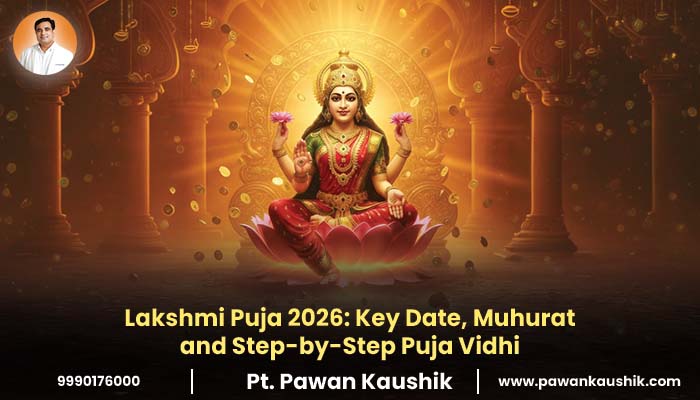 Lakshmi Puja is an auspicious ritual performed to invoke the blessings of Maa Lakshmi. However, knowing the correct worship vidhi (puja vidhi), mantras, and significance is essential. Learn how to perform Lakshmi Puja in 2026 by following this guide.
Lakshmi Puja is a sacred occasion to worship the goddess of wealth and prosperity, Mata Lakshmi, and seek her blessings for abundance in the family. The sacred occasion falls on Diwali tithi, and the puja is performed in the evening.
When is Lakshmi Puja? Lakshmi Puja Date and Time
Lakshmi Puja will be observed on 8 November 2026 (Sunday), with the main rituals performed in the evening.Lakshmi Puja Muhurat – 05:54 PM to 07:50 PM
Pradosh Kaal – 05:31 PM to 08:09 PM
Vrishabha Kaal – 05:54 PM to 07:50 PM
Amavasya Tithi Begins – 11:27 AM on Nov 08, 2026
Amavasya Tithi Ends – 12:31 PM on Nov 09, 2026
Lakshmi Puja Nishita Kaal for those who follow midnight worship
Lakshmi Puja Nishita Kaal muhurat: 11:39 PM to 12:31 AM, Nov 09 (Monday).City-Wise Lakshmi Puja Muhurat 2026 in India
| City | Muhurat |
| Pune | 06:24 PM to 08:24 PM |
| New Delhi | 05:54 PM to 07:50 PM |
| Chennai | 06:06 PM to 08:09 PM |
| Jaipur | 06:03 PM to 07:59 PM |
| Hyderabad | 06:07 PM to 08:08 PM |
| Gurgaon | 05:55 PM to 07:51 PM |
| Chandigarh | 05:52 PM to 07:46 PM |
| Kolkata | 05:20 PM to 07:18 PM |
| Mumbai | 06:27 PM to 08:27 PM |
| Bengaluru | 06:17 PM to 08:20 PM |
| Ahmedabad | 06:22 PM to 08:20 PM |
| Noida | 05:54 PM to 07:49 PM |
Why is Lakshmi Puja performed on Deepawali?
Worship of Goddess Lakshmi is the key ritual of the Deepavali festival. Devotees wear clean clothes, and following the Lakshmi puja muhurat, they worship Mata Lakshmi, Lord Narayana, Shree Ganesha, Lord Kubera and Mata Saraswati. However, most people are not aware of the reason behind the worship of Mata Lakshmi on Diwali, so let’s discuss: Why Is Lakshmi Puja Celebrated on Diwali?The Emergence of the Goddess During Samudra Manthan
Lakshmi Puja on Divali marks the emergence of Maa Lakshmi from the churning of the ocean by the Devas and Asuras. Several treasures and divine beings were drawn from the churning (Manthan) by Devas and Asuras in the hope of obtaining the Amrit (nectar). Among them, Mata Lakshmi emerged seated on a lotus, who chose Lord Vishnu as her eternal consort.The incident of Mata Lakshmi’s appearance is mentioned in several sacred scriptures, including the Bhagavata Purana and the Vishnu Purana and is traditionally associated with the worship of Goddess Lakshmi on Deepavali.
Lakshmi Puja Meaning
Lakshmi puja means the worship of the wealth goddess or offering prayers to the deity, who is the source of money and prosperity. On Deepawali, and on the occasion of Lakshmi Puja, devotees clean their houses, draw rangoli, and light diyas and candles everywhere to welcome Mata Lakshmi into their home.Devotees worship Lord Ganesha first, then Mata Lakshmi, and then Kuber, the lord of treasure. This worship is done in the evening to invoke the blessings of Shree Lakshmi, who is the giver of prosperity and well-being, and this is known as the Lakshmi Pujan.
What is Ashta Lakshmi? Eight Manifestations of Goddess Lakshmi
Shakti, or the creative force of the divine in sacred Hindu texts, is shown as feminine and is manifested in a variety of forms. Hindu tradition describes Lakshmi Mata in 8 forms (roop), and among them is the main form, who is the eternal consort of Lord Vishnu- the sustainer of the three worlds. Let’s understand each of the forms of Mata Lakshmi and the unique blessing each one of them carries:Adi Lakshmi: The primordial form that is associated with root and helps one understand their goal, aim and objective in life. Adi Lakshmi is also known as the Mokshya Pradayani, who liberates from the cycle of birth and death. She is the root energy and mother goddess from which other sources of money and prosperity flow.
Dhana Lakshmi: Mata Dhana Lakshmi is the source of all wealth and money. She blesses those who strive and work hard to earn by offering wealth and success. Dhana Lakshmi represents cash, gold, silver, and jewellery, and all kinds of wealth and property.
Dhanya Lakshmi: Mata Dhanya Lakshmi is the source of agriculture, food, and nourishment. Devotees also honour Mata Dhanya Lakshmi and chant her name before partaking of meals. She also represents growth, renewal, and the greenery of agriculture.
Gaja Lakshmi: Mata Gaja Lakshmi represents cattle, royal fame and power. The word Gaja refers to an elephant, and Lakshmi is the deity of prosperity and wealth. Thus, Gaja Lakshmi represents the form of Goddess Lakshmi associated with abundance, royal power, fertility, and prosperity. She blesses devotees with prosperity, wealth in livestock, and the power and authority to rule.
Santan Lakshmi: Mata Santan Lakshmi is associated with progeny, childcare and family continuity. Santan means offspring, and Lakshmi is the goddess; thus, Santan Lakshmi blesses the prosperity of children or offspring. Devotees (couples) worship her to fulfil their desires for santan (progeny, or children). The goddess is also shown holding a baby in her lap.
Veer Lakshmi: Mata Veer Lakshmi is another form of Ashta Lakshmi, who represents courage, bravery, valour and strength and bestows the power to win against adversities and rivalry. She also blesses with the power to overcome the obstacles in one’s material and spiritual journey. Veer Lakshmi is also called Dhairya Lakshmi, and the goddess is worshipped to invoke the blessings of courage and patience to face and overcome hardship in life.
Vidya Lakshmi: Vidya Lakshmi is another form, which represents knowledge, wisdom and skill sets important for life’s survival and success. The goddess is the source of spiritual knowledge, understanding, and learning. Devotees worship her for intellectual development, success in career and gains through knowledge and studies.
Vijaya Lakshmi: Mata Vijaya Lakshmi is another form of Mata Lakshmi, who signifies victory and success. She instils devotees with hope and inspiration. Vijaya Lakshmi is also known as Jaya Lakshmi, who helps devotees overcome life’s difficulties with strength and patience and conquers all odds. She also favours those who maintain a positive attitude in the face of all difficulties.
Lakshmi Puja Vidhi at Home: How to Worship Goddess Lakshmi?
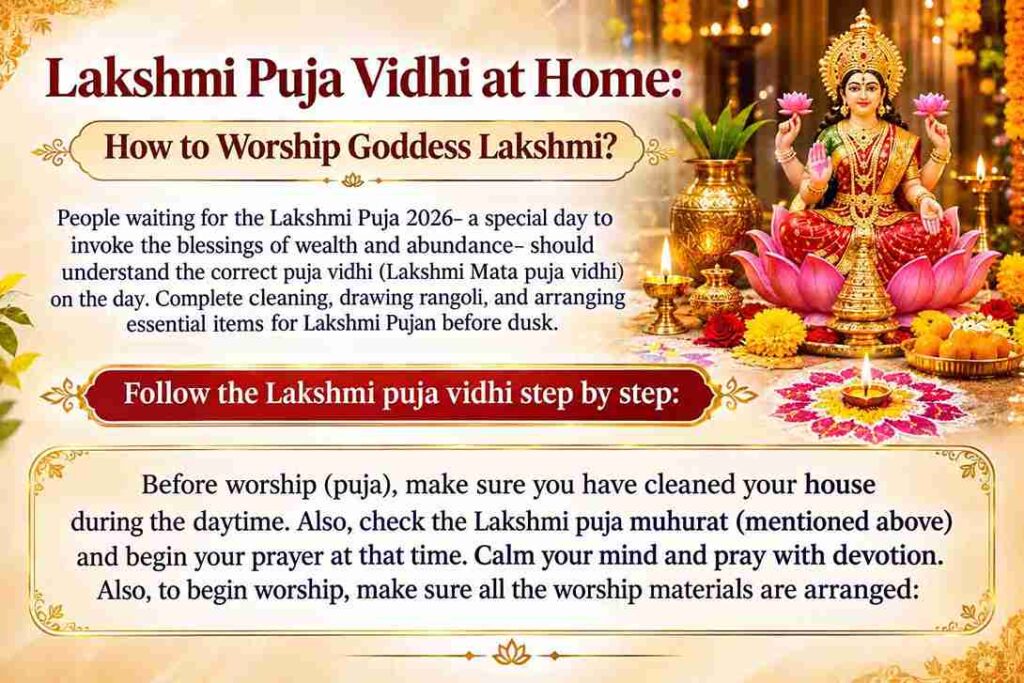 People waiting for the Lakshmi Puja 2026- a special day to invoke the blessings of wealth and abundance- should understand the correct puja vidhi (Lakshmi Mata puja vidhi) on the day. Complete cleaning, drawing rangoli, and arranging essential items for Lakshmi Pujan before dusk. Follow the Lakshmi puja vidhi step by step:
Before worship (puja), make sure you have cleaned your house during the daytime. Also, check the Lakshmi puja muhurat (mentioned above) and begin your prayer at that time. Calm your mind and pray with devotion. Also, to begin worship, make sure all the worship materials are arranged:
Lakshmi Puja Samagri List
Arrange the following before the worship to ensure a smooth and well-organised Lakshmi Puja.- Idol or picture of Goddess Lakshmi. (If possible, also take Lord Ganesha and Kuber idols)
- Puja Altar (wooden stool on which the picture of the goddess is placed).
- A red or yellow cloth to cover the puja stool.
- Kalash- holy pot or ritual pot.
- Diyas (earthen lamps) or other alternatives (as per the family tradition)
- Fresh flowers, garlands, bilva leaves (Belpatra), durva grass, pancha pallav, etc
- Offerings (Prasadam)- Naivedyam, sweets, fruits, betel leaf (paan), betel nut (supari), etc.
- Other puja items: Akshat, roli or kumkum, a coconut, chandan, moli, camphor, incense and ghee.
Step 2: Sprinkle Gangaajal (sacred water) all over the puja space and upon you to purify everything before the worship. Now, take a Sankalp (Vow) before beginning the puja, uttering your name and gotra.
Step 3: Now, begin your worship by offering prayer to Lord Ganesha (Pratham Pujya Devta), as he is worshipped first before any puja.
Step 4: Offer flowers, akshat, durva grass, kumkum, and food or sweet offerings (Devotees also offer Modak as sweets) to Lord Ganesha and chant his beej mantra (Om Gan Ganapataye Namah- 108, 51, or 11 times).
Step 5: Now, worship the main deity of Lakshmi Puja- Mata Lakshmi by offering her lotus or red flowers, kumkum, akshat, batasha, sweets, etc. People also place silver coins, gold, jewellery to invoke the goddess’ blessings on those materials. Businessmen or traders also put account books before her (Mata Lakshmi).
Now, chant the Mantras of Goddess Lakshmi, like Lakshmi’s Beej Mantra, Lakshmi Gayatri Mantra, etc. People also recite Lakshmi Chalisa, or Shri Suktam Path or Kanakadhara Stotram Path, etc to overcome financial obstacles and invoke the blessings of Mata Lakshmi for financial gain and success.
Step 6: Now, conclude your worship by offering Aarti along with your family (if you are living with your family members) and distribute the Prasadam with them and neighbours.