+91 9990176000
 +91 9999097600
 CALENDAR 2026


 Hanuman Jayanti is one of the powerful and revered festival in Hinduism culture that marks the divine birth of Lord Hanuman. Known as the devotee of Deity Ram, Shree Hanuman is the symbol of strength, devotion and courage and humility where we all pays faith in him. He is worshipped across the India and world by millions of his devotees. As we approaches closer to the festival, there is common query among many that when Hanuman Jayanti in 2026?
This blog answers that question and takes you through the meaning, history, significance, rituals, and celebrations associated with Hanuman Jayanti 2026.
Hanuman Jayanti 2026 Date & Time
One of the most searched queries every year is related to the festival date.For those wondering Hanuman Jayanti kab hain, here are the exact details:
- Hanuman Jayanti 2026 Date: Thursday, 2 April 2026
- Purnima Tithi Begins: 07:06 AM on 1 April 2026
- Purnima Tithi Ends: 07:41 AM on 2 April 2026
What Is Hanuman Jayanti? (Hanuman Jayanti Meaning)
To understand the true essence of the festival, it is important to know what is Hanuman Jayanti and why it is celebrated with such devotion.Hanuman Jayanti marks the birth anniversary of Lord Hanuman, who is considered an incarnation of Lord Shiva and the son of Kesari and Anjana. Also, Vayu Dev (the Wind God) is considered lord’s Hanuman’s divine/spritual father who has blessed him with strength & speed. The festival celebrates not just his divine birth on earth, but the spiritual qualities he represents—absolute devotion, selfless service, inner strength, discipline, and fearlessness.
The Hanuman Jayanti meaning is not only limited to ritualistic worship. It reminds devotees that true power lies in humility, faith, and dedication to dharma. Lord Hanuman teaches that when ego dissolves, divine strength emerges.
Why Do We Celebrate Hanuman Jayanti?
Devotees celebrate Hanuman Jayanti to honor Lord Hanuman’s unparalleled devotion to Lord Ram and his role in restoring dharma during the Ramayana period. His life symbolizes: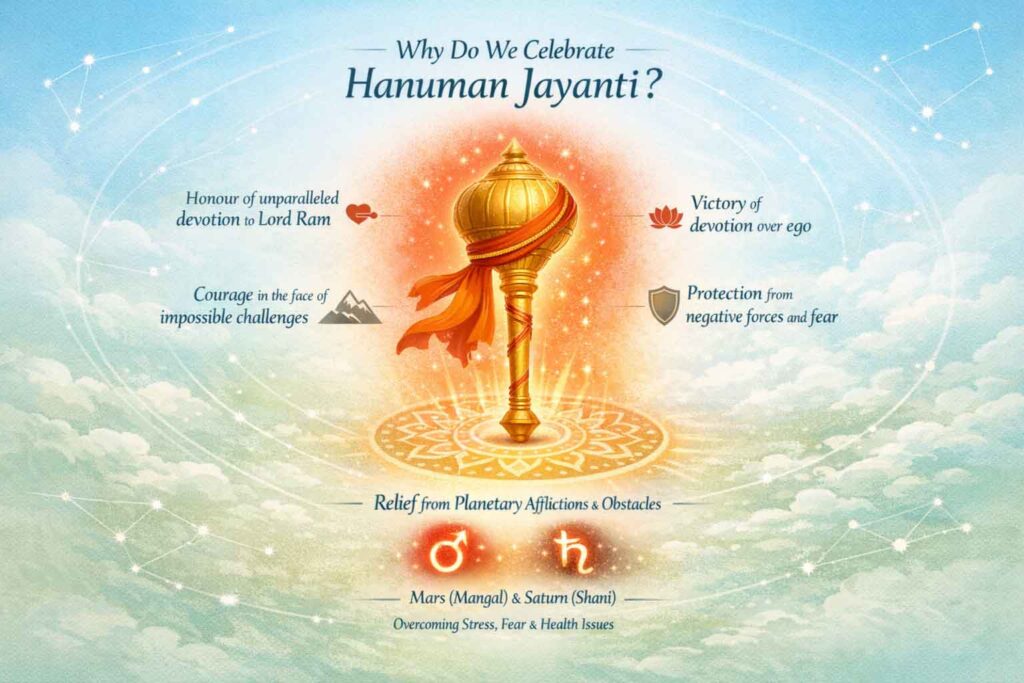
- Victory of devotion over ego
- Courage in the face of impossible challenges
- Protection from negative forces and fear
- Discipline, celibacy, and spiritual power
Also check out our thoughts on How to Remove Negative Energy from Home on Hanuman Jayanti

Significance of Hanuman Jayanti
The significance of Hanuman Jayanti lies in both spiritual and astrological dimensions.Spiritually, Lord Hanuman is regarded as Sankat Mochan, the remover of troubles. Devotees believe that sincere prayers on this day:
- Remove fear, negativity, and evil influences
- Strengthen mental and physical energy
- Provide protection from unseen dangers
- Shani Dosha
- Mangal Dosha
- Effects of malefic planetary periods
History and Mythological Background of Lord Hanuman
The history of Lord Hanuman is deeply rooted in Hindu scriptures such as the Valmiki Ramayana, Shiva Purana, Skanda Purana, and Hanuman Upanishad, where his birth is described as a divinely planned incarnation meant to support Lord Vishnu’s avatar, Shri Ram, in the restoration of dharma.Lord Hanuman arrival to earth as human is divine but Anjana and Kesari were his actual parents on earth. The Wind God Vayu Dev blessed Lord Hanuman divine measuring speed and potent, which is why Hanuman is also called Pavanputra. This divine origin explains his extraordinary physical strength, speed, intelligence, and spiritual power.
A well-known childhood legend narrates how young Hanuman mistook the rising sun for a ripe fruit and leapt into the sky to seize it. When Indra struck him with his thunderbolt to stop him, Vayu Dev became furious and withdrew air from the universe. To restore balance, the gods blessed Hanuman with multiple boons—immortality, fearlessness, wisdom, protection from weapons, and unmatched strength. This incident highlights that Hanuman’s power was not self-earned pride, but a divine responsibility.
The central theme of Hanuman’s life is devotion. In the Ramayana, his role is indispensable—whether it is locating Mother Sita in Lanka, burning Ravana’s golden city, carrying the Sanjeevani mountain to save Lakshman, or acting as Lord Ram’s most loyal messenger. Despite his immense abilities, Hanuman remained humble, always attributing his power to Lord Ram.
Hanuman Jayanti commemorates not just his birth, but the ideal qualities he represents—selfless service, discipline, courage, and absolute surrender to divine will.
History and Mythological Background of Lord Hanuman
The history of Lord Hanuman is deeply rooted in Hindu scriptures such as the Valmiki Ramayana, Shiva Purana, Skanda Purana, and Hanuman Upanishad, where his birth is described as a divinely planned incarnation meant to support Lord Vishnu’s avatar, Shri Ram, in the restoration of dharma.Lord Hanuman was born to Anjana, a celestial apsara who was cursed to be born on earth, and Kesari, the king of the Vanaras. The Wind God Vayu Dev played a crucial role in Hanuman’s birth by infusing divine energy into Anjana, which is why Hanuman is also called Pavanputra. This divine origin explains his extraordinary physical strength, speed, intelligence, and spiritual power.
A well-known childhood legend narrates how young Hanuman mistook the rising sun for a ripe fruit and leapt into the sky to seize it. When Indra struck him with his thunderbolt to stop him, Vayu Dev became furious and withdrew air from the universe. To restore balance, the gods blessed Hanuman with multiple boons—immortality, fearlessness, wisdom, protection from weapons, and unmatched strength. This incident highlights that Hanuman’s power was not self-earned pride, but a divine responsibility.
The central theme of Hanuman’s life is devotion. In the Ramayana, his role is indispensable—whether it is locating Mother Sita in Lanka, burning Ravana’s golden city, carrying the Sanjeevani mountain to save Lakshman, or acting as Lord Ram’s most loyal messenger. Despite his immense abilities, Hanuman remained humble, always attributing his power to Lord Ram.
Hanuman Jayanti commemorates not just his birth, but the ideal qualities he represents—selfless service, discipline, courage, and absolute surrender to divine will.
Hanuman Jayanti Puja Vidhi
Observing the correct Hanuman Jayanti Puja Vidhi helps devotees connect deeply with the protective and empowering energies of Lord Hanuman. The rituals are simple yet highly powerful when performed with sincerity.Preparation for Puja
Devotees begin the day by waking up early, preferably during Brahma Muhurat, and taking a bath to purify the body and mind. Wearing red or saffron-colored clothes is considered auspicious, as these colors symbolize energy, devotion, and strength—qualities associated with Bajrangbali.The puja area should be cleaned thoroughly, and an idol or image of Lord Hanuman should be placed facing east or north. Maintaining cleanliness and calmness is essential before beginning the worship.
Puja Rituals
A ghee diya and incense sticks are lit to invoke divine presence. Devotees offer sindoor, as it is believed to be especially dear to Lord Hanuman, along with red flowers, bananas, coconut, jaggery, and laddoos.Recitation of Hanuman Chalisa, Sundarkand, or Bajrang Baan forms the core of the worship. Chanting the mantra “Om Hanumate Namah” 108 times with concentration helps strengthen inner courage and remove fears.
Bhog and Aarti
After the recitation, bhog such as boondi laddoos, roasted chana, fruits, or jaggery-based sweets is offered. The puja concludes with Hanuman Aarti, seeking blessings for protection, strength, and wisdom.How to Celebrate Hanuman Jayanti
Many devotees wonder how to celebrate Hanuman Jayanti beyond rituals. The essence of this festival lies in living Hanuman ji’s values.- Observing a satvik fast or consuming fruits and milk helps maintain purity of body and mind
- Visiting a Hanuman temple early in the morning enhances spiritual focus
- Participating in bhajans, kirtans, or Akhand Hanuman Chalisa creates powerful collective energy
- Feeding the needy, cows, or monkeys reflects Hanuman ji’s spirit of service and compassion
- Practicing calm speech, self-control, and positive thinking throughout the day is considered a true form of worship
Hanuman Jayanti Rangoli and Festive Decorations
Decorating the home and temple with Hanuman Jayanti Rangoli is a symbolic way to invite divine energies. Rangoli designs often depict:- Lord Hanuman’s face, gada, or folded hands
- The sacred name of Shri Ram written artistically
- Auspicious symbols like lotus, diya, tilak, or conch
Regional Variations of Hanuman Jayanti
Although Chaitra Purnima is the most commonly observed date in North India, Hanuman Jayanti is celebrated differently across regions:- Andhra Pradesh & Telangana: Celebrated over a 41-day spiritual observance beginning from Chaitra Purnima
- Tamil Nadu & Kerala: Observed during the Margazhi month with unique temple rituals
- Karnataka: Celebrated in the Margashirsha period with fasting and special pujas

Summary
Hanuman Jayanti 2026 is not merely a ritualistic festival; it is a profound spiritual reminder to awaken inner strength, overcome fear, and surrender ego through devotion and discipline. Understanding the history, mythology, rituals, and philosophy behind this sacred day allows devotees to connect more deeply with Lord Hanuman’s divine energy.As you observe Hanuman Jayanti this year, may Bajrangbali bless you with courage in adversity, clarity in confusion, and unwavering faith on your life’s path. Jai Shree Ram, Jai Hanuman.