+91 9990176000
 +91 9999097600
 CALENDAR 2026


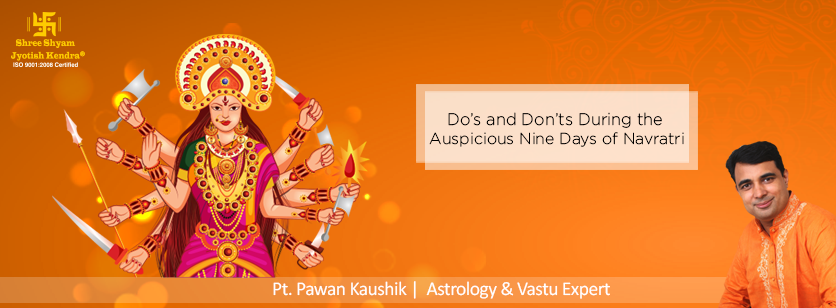
Navratri, which will be observed from 21st September, 2017 to 29th September, 2017, is one of the most significant Hindu festivals. The sacred nine days of Navratri are devoted to the nine incarnations (roop) of Goddess Durga – Shailaputri, Brahmacharini, Chandraghanta, Kushmanda, Skandamata, Kathyayini, Kaalaratri, Maha Gauri and Siddhidhatri – each one having its own significance.
Several devotees keep fasts during Navratri and organise ‘Kanya Puja’ on the eighth or ninth day of the festival. Dandiya Nights are another big highlight of the festival. Apart from the fun and fiesta, there are certain do’s and don’ts, which one must follow during this auspicious period of Navratri.
Do’s during the nine days of Navratri
- Have early morning shower daily and visit the temple to worship Goddess Durga with lamps, flowers, etc. If visiting the temple daily is not possible, worship the Goddess in your home’s temple area every day.
- Offering water to the Goddess is considered highly auspicious during Navratri.
- Fasts are an integral part of Navratri that are observed to please the Goddess and seek her blessings. It is also a good way to help cleanse your body of toxic materials and keep it healthy.
- Performing ‘Kanya Puja’ on the eighth or ninth day of Navratri is considered highly auspicious. Nine girls (younger than 10 years of age) are invited along with a young little boy for Kanya Puja. You welcome them by washing their feet and then feed them with special delicacies.
Don’ts during the nine days of Navratri
- Don’t consume alcohol during these auspicious nine days.
- Don’t bring slippers or shoes inside the home. Leave them near the doorstep.
- While many people avoid eating non-vegetarian food and food that has onion and garlic in it, not many know that it is highly inauspicious to cut a lemon in your home during this time. So, don’t cut lemons as well.
- Don’t clutter your home.
- Don’t offer tulsi leaves to the Goddess.