+91 9990176000
 +91 9999097600
 CALENDAR 2026


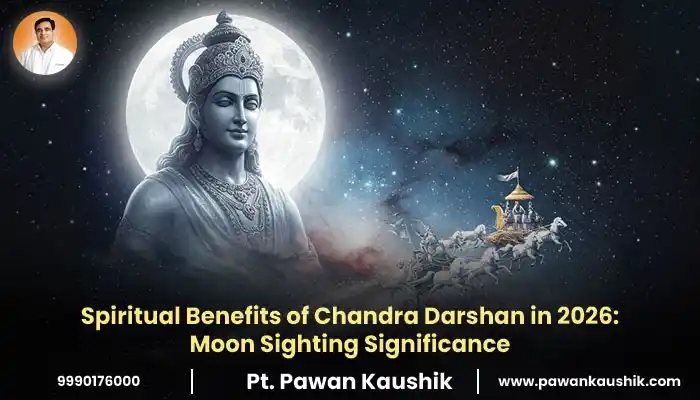 In Hindu traditions, the Moon is not seen merely as a celestial body shining in the night sky. It is deeply connected with the human mind, emotions, peace, intuition, and inner stability. This is one reason why Chandra Darshan, the sacred ritual of Moon sighting after Amavasya, holds such special spiritual importance in Sanatan Dharma.
For centuries, devotees have observed Chandra Darshan with devotion to seek mental peace, emotional balance, prosperity, and positivity in life. Whether it is the first crescent Moon after Amavasya, Karwa Chauth Moon sighting, or Moon worship during important vrats, this ritual continues to remain an important spiritual practice in many Hindu households.
In Hindu traditions, the Moon is not seen merely as a celestial body shining in the night sky. It is deeply connected with the human mind, emotions, peace, intuition, and inner stability. This is one reason why Chandra Darshan, the sacred ritual of Moon sighting after Amavasya, holds such special spiritual importance in Sanatan Dharma.
For centuries, devotees have observed Chandra Darshan with devotion to seek mental peace, emotional balance, prosperity, and positivity in life. Whether it is the first crescent Moon after Amavasya, Karwa Chauth Moon sighting, or Moon worship during important vrats, this ritual continues to remain an important spiritual practice in many Hindu households.
What is Chandra Darshan?
Chandra Darshan refers to the auspicious sighting of the Moon, especially the first visible crescent Moon after Amavasya or New Moon day. The word “Chandra” means Moon, while “Darshan” refers to sacred viewing or divine sight. This spiritual observance is generally performed during the evening after sunset when the Moon becomes visible in the sky after the Amavasya. Devotees offer prayers, water, flowers, rice, milk, and gratitude to Chandra Dev while seeking blessings for peace, prosperity, emotional stability, and positive energy. In many traditions, Chandra Darshan is also associated with fasting rituals, Moon worship, and spiritual discipline.Why is Chandra Darshan considered spiritually important?
The Moon has always held deep spiritual significance in Hindu culture. Unlike the Sun, which symbolizes authority and soul consciousness, the Moon is associated with emotions, calmness, intuition, sensitivity, nourishment, and the human mind.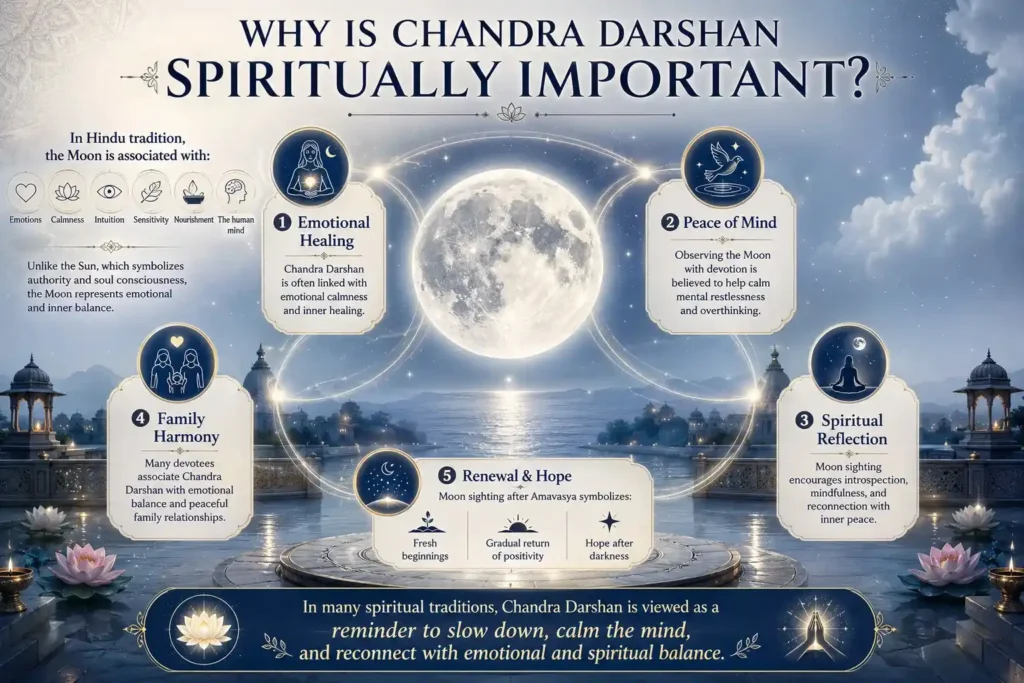 This is one reason Chandra Darshan is often linked with:
- emotional healing,
- peace of mind,
- spiritual reflection,
- family harmony,
- and inner balance.
Chandra Darshan 2026 dates and timings
According to Drik Panchang, Chandra Darshan in 2026 will be observed on the following dates:January 20, 2026, Tuesday
Chandra Darshan Timing: 17:50 to 19:16
Pratipada Duration: 01 Hour 25 Mins
February 18, 2026, Wednesday
Chandra Darshan Timing: 18:13 to 19:05
Pratipada Duration: 00 Hours 52 Mins
March 20, 2026, Friday
Chandra Darshan Timing: 18:32 to 19:59
Pratipada Duration: 01 Hour 26 Mins
April 18, 2026, Saturday
Chandra Darshan Timing: 18:49 to 19:56
Pratipada Duration: 01 Hour 08 Mins
May 17, 2026, Sunday
Adhika Chandra Darshan Timing: 19:06 to 19:58
Pratipada Duration: 00 Hours 52 Mins
June 16, 2026, Tuesday
Chandra Darshan Timing: 19:21 to 20:54
Pratipada Duration: 01 Hour 33 Mins
July 15, 2026, Wednesday
Chandra Darshan Timing: 19:21 to 20:19
Pratipada Duration: 00 Hours 58 Mins
August 14, 2026, Friday
Chandra Darshan Timing: 19:02 to 20:01
Pratipada Duration: 00 Hours 59 Mins
September 13, 2026, Sunday
Chandra Darshan Timing: 18:29 to 19:31
Pratipada Duration: 01 Hour 02 Mins
October 12, 2026, Monday
Chandra Darshan Timing: 17:55 to 18:36
Pratipada Duration: 00 Hours 41 Mins
November 11, 2026, Wednesday
Chandra Darshan Timing: 17:29 to 18:38
Pratipada Duration: 01 Hour 09 Mins
December 10, 2026, Thursday
Chandra Darshan Timing: 17:25 to 18:16
Pratipada Duration: 00 Hours 51 Mins
All timings may vary slightly according to location and regional Panchang calculations.
Chandra Dev in Hindu beliefs
In Hindu scriptures, Chandra Dev is regarded as one of the Navagrahas and is considered the deity associated with the mind and emotions.The Moon is also closely connected with Lord Shiva, who adorns the crescent Moon on his head. Spiritually, this symbolizes control over emotions, time, and mental balance.
Ancient texts describe Chandra Dev as:
- the ruler of the mind,
- the provider of emotional nourishment,
- and the symbol of fertility, peace, beauty, and growth.
Astrological importance of the Moon in Vedic astrology
In Vedic astrology, the Moon is considered one of the most powerful planetary influences because it directly affects emotional behavior, thought patterns, sensitivity, imagination, intuition, and psychological balance.The Moon changes zodiac signs approximately every 2.25 days, which is why moods and emotional tendencies are believed to fluctuate frequently according to lunar movement.
A strong Moon in the horoscope is often associated with:
- mental peace,
- emotional stability,
- confidence,
- creativity,
- nurturing qualities,
- and harmonious relationships.
- stress,
- confusion,
- emotional instability,
- overthinking,
- mood swings,
- anxiety,
- or lack of clarity.
Spiritual benefits of Chandra Darshan
Mental peace and emotional calmness
One of the most commonly associated benefits of Chandra Darshan is emotional calmness. The Moon is believed to govern the mind, and Moon sighting is traditionally associated with reducing mental turbulence and bringing emotional balance.Many devotees spend a few peaceful moments silently observing the Moon as a form of spiritual relaxation and reflection.
Symbol of new beginnings
The first visible Moon after Amavasya represents gradual light emerging from darkness. Spiritually, this is often seen as a symbol of hope, renewal, healing, and positive beginnings in life.Family harmony and relationship balance
Since the Moon is connected with emotions and sensitivity, Moon worship is also believed to strengthen understanding, compassion, and emotional bonding within relationships and families.This is one reason Chandra Darshan plays an important role during Karwa Chauth and several other traditional vrats.
Spiritual awareness and positivity
Many people believe that observing Chandra Darshan with devotion strengthens positivity, inner awareness, patience, and spiritual discipline.
Scientific perspective behind Moon sighting
While Chandra Darshan is primarily spiritual and cultural, several people also associate it with natural and psychological effects linked with lunar cycles.Moon and water connection
The Moon influences ocean tides, and since the human body contains a significant percentage of water, some traditions believe lunar movement may subtly affect emotional and biological rhythms.Lunar rhythm and sleep cycle
Various studies and observations have explored the possible influence of Moon phases on sleep patterns, emotional sensitivity, and mental state during full Moon and New Moon phases.Moon observation as mindfulness
Spending quiet moments observing the Moon can naturally create calmness and reduce stress. In many ways, Moon sighting also works as a meditative practice that encourages mindfulness and emotional relaxation.Chandra Darshan rituals and puja vidhi (the day after Amavasya)
Chandra Darshan rituals are usually simple, devotional, and peaceful in nature. Though customs may vary according to region and family traditions, the essence of Moon worship remains centered around gratitude, calmness, and spiritual positivity.The ritual generally begins after sunset once the Moon becomes visible in the sky.
Devotees usually:
- take a bath before the ritual,
- wear clean clothes,
- prepare a simple puja thali,
- and offer water or milk to the Moon.
After offering Arghya to the Moon, devotees chant Chandra mantras and pray for peace, emotional stability, prosperity, and family well-being.
Chandra mantras associated with Moon worship
Mantras are considered an important part of Chandra worship because they are believed to calm the mind and strengthen positive lunar energy.Chandra Beej Mantra
“ॐ सोम सोमाय नमः॥”This mantra is commonly chanted to reduce stress, improve emotional balance, and strengthen Moon-related positivity.
Chandra Mantra
“ॐ चन्द्राय नमः॥”This mantra is associated with peace, calmness, emotional healing, and mental clarity.
Chandra Gayatri Mantra
“ॐ क्षीरपुत्राय विद्महेअमृत तत्वाय धीमहि
तन्नो चन्द्रः प्रचोदयात्॥”
This mantra is recited for emotional healing, positivity, and spiritual peace.
Foods and offerings associated with Chandra Darshan
White-colored offerings are generally considered auspicious during Moon worship because they symbolize calmness, purity, and lunar energy.Common offerings include:
- milk,
- rice,
- kheer,
- white sweets,
- sugar,
- coconut,
- and white flowers.
Importance of fasting during Chandra Darshan
Many devotees observe fasting during Chandra Darshan for spiritual discipline and purification.The fast is usually broken after Moon sighting and prayers. According to spiritual beliefs, fasting during Chandra Darshan helps:
- improve self-discipline,
- calm the mind,
- reduce negativity,
- and strengthen spiritual focus.
Mythological story associated with Chandra Dev
According to Hindu mythology, Chandra Dev married the 27 daughters of Daksha Prajapati, who are also associated with the 27 Nakshatras.However, Chandra favored Rohini more than the others, which angered Daksha Prajapati. As a result, Chandra was cursed to gradually lose his brightness.
Later, Lord Shiva partially relieved the curse, which is believed to explain the waxing and waning cycle of the Moon.
This story is often interpreted as a symbolic reminder about emotional balance, attachment, and the cyclical nature of life.
Chandra Darshan and zodiac signs
The Moon influences every zodiac sign differently because it governs emotional patterns, intuition, reactions, and psychological tendencies.Many astrologers believe Chandra Darshan may positively support:
- confidence in Aries,
- emotional peace in Cancer,
- creativity in Pisces,
- communication in Gemini,
- and relationship harmony in Libra.
Common Moon-related problems in astrology
When the Moon becomes weak or afflicted in a horoscope, it may affect emotional balance and mental stability.According to Vedic astrology, some commonly discussed Moon-related combinations include:
- Moon with Rahu,
- Moon with Saturn,
- weak Moon placement,
- afflicted Moon in difficult houses,
- or stress during difficult Moon Mahadasha periods.
- overthinking,
- anxiety,
- confusion,
- emotional instability,
- lack of confidence,
- disturbed sleep,
- mood fluctuations,
- and mental restlessness.
Who should especially observe Chandra Darshan?
Though anyone can perform Chandra Darshan with devotion, many traditions especially recommend Moon worship for individuals experiencing:- emotional stress,
- mental exhaustion,
- overthinking,
- lack of peace,
- relationship imbalance,
- sleep disturbance,
- anxiety,
- or emotional sensitivity.

Conclusion
Chandra Darshan is much more than simply seeing the Moon in the sky. It is a spiritual practice deeply connected with peace, emotional balance, positivity, reflection, and inner calmness.Through Moon sighting, prayers, fasting, mantra chanting, and devotional rituals, devotees seek harmony between the mind, emotions, and spiritual awareness.
Even today, Chandra Darshan continues to remind people to slow down, reconnect with nature, and bring calmness into an increasingly stressful and fast-moving life.