+91 9990176000
 +91 9999097600
 CALENDAR 2026


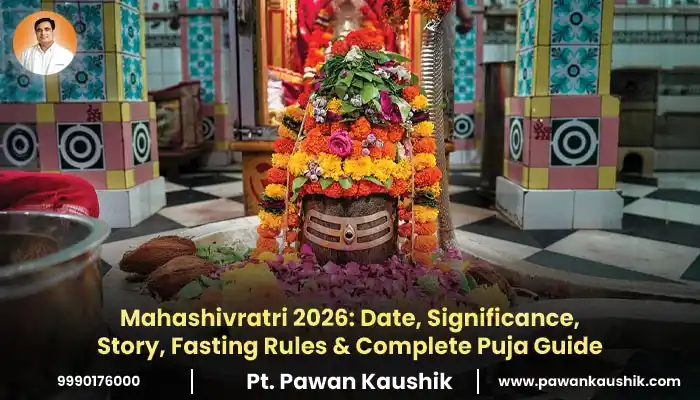 Mahashivratri is one of the most spiritually powerful festivals in Hinduism, dedicated to Lord Shiva, the supreme consciousness and destroyer of ignorance. Observed with fasting, night-long worship, meditation, and devotion, this sacred occasion is believed to cleanse karmic burdens and guide devotees toward inner awakening. Unlike other festivals marked by celebration, Mahashivratri emphasises discipline, silence, and spiritual elevation.
Mahashivratri 2026 Date and Time
Many devotees often ask when is Mahashivratri in 2026. According to the Hindu Panchang, Mahashivratri 2026 will be observed on Sunday, 15 February 2026. Check all important dates related to this Hindu sacred festival mentioned below:- In 2026, Mahashivratri will be celebrated on the 15th of February, 2026.
- Mahashivratri Nishita kal in 2026 is from 12:09 am to 01: 01 am on 16th of February.
- Shivratri Paran timing in 2026 will be from 06: 59 am to 03: 24 pm on 16th of February, 2026.
Mahashivratri Prahar Puja timing is as follows:
- The Pratham Ratri Prahar is on January 15th, 2026 from 06:11 pm to 09:23 pm.
- The second ratri prahar is on the 15th of February, 2026 from 09:23 pm to 12:35 am (16th of February).
- The third ratri prahar is on the 16th of February, 2026 from 12:35 am to 03:47 am.
- The fourth ratri prahar is on the 16th of February, 2026 from 03:47 am to 06:59 am.
For devotees in India, the Mahashivratri pooja time is especially significant during Nishita Kaal, which falls around midnight and is considered the most powerful time to perform Shiv Puja.
Also check out our thoughts on When Is Holi in 2026

Why Mahashivratri Is Celebrated
Many people wonder why Mahashivratri is celebrated every year with such devotion. Spiritually, this night represents the convergence of cosmic energies that support inner transformation and self-realisation.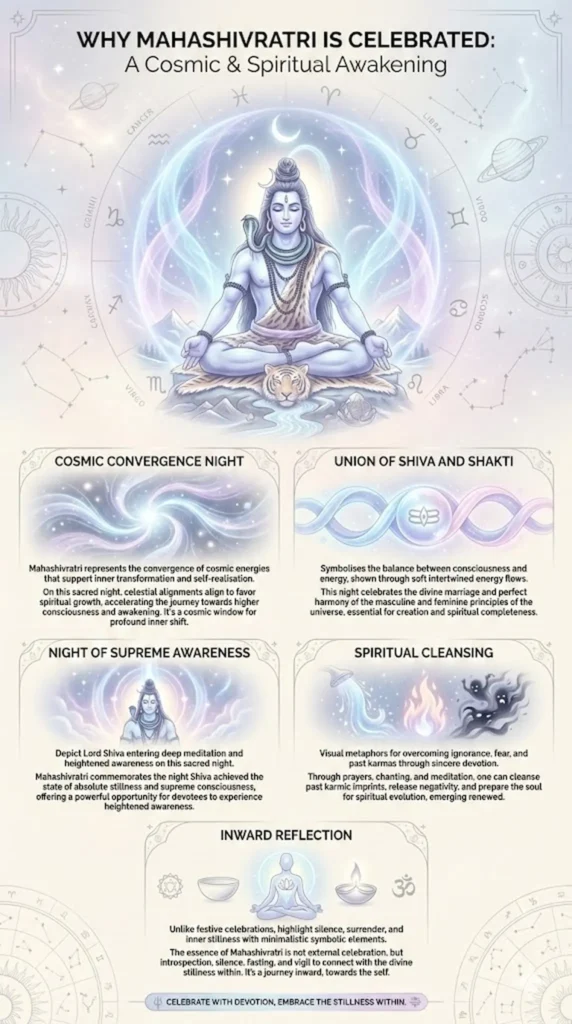
Mahashivratri is celebrated because:
- It symbolises the union of Shiva and Shakti, representing balance between consciousness and energy
- It is believed that Lord Shiva entered a state of deep meditation and supreme awareness on this night
- Devotees believe sincere worship helps overcome ignorance, fear, and past karmas
Mahashivratri Story and Mythological Beliefs
The Mahashivratri story is deeply rooted in Hindu scriptures and spiritual traditions. One of the most popular beliefs is associated with the divine marriage of Lord Shiva and Goddess Parvati. After intense penance, Goddess Parvati attained Shiva as her divine consort on this sacred night, symbolising devotion, perseverance, and spiritual union.Another belief states that on Mahashivratri, Lord Shiva performed the cosmic Tandava, representing creation, preservation, and destruction. Some traditions also believe that Shiva manifested as the Shivling, the infinite pillar of light, on this night, reminding humanity of the eternal and formless nature of the divine.
These stories together explain the deep significance of Mahashivratri as a night of spiritual awakening and divine grace.
Importance and Significance of Mahashivratri
The importance of Mahashivratri goes far beyond rituals. It is considered a powerful spiritual gateway for those seeking clarity, discipline, and inner peace.This sacred night is believed to:
- Support deep meditation and heightened spiritual awareness
- Help dissolve accumulated karmic impressions
- Encourage self-control, purity of thought, and devotion
- Bring blessings related to peace, stability, and spiritual growth
How to Do Mahashivratri Fast Properly
Observing a fast on this day is an important part of devotion. Many devotees seek guidance on how to do Mahashivratri fast correctly, especially first-timers.The fast usually begins at sunrise on 15th February, 2026 and is broken the next day after sunrise on 16th February, 2026. Depending on personal health and devotion, people follow different forms of fasting.
Common Mahashivratri fasting rules include:
- Observing nirjala fast (without food and water) or phalahar fast (fruits and milk)
- Avoiding grains, non-vegetarian food, alcohol, and negative thoughts
- Maintaining purity through prayer, silence, and meditation
- Staying awake during the night for Shiva worship
Mahashivratri Pooja Time and Nishita Kaal (Delhi)
The most auspicious time for worship is Nishita Kaal, which occurs around midnight. As per IST (Indian Standard Time), Nishita Kaal during Mahashivratri 2026 falls approximately between 12:09 AM and 01:01 AM on 16 February.Devotees also perform Shiva Puja throughout the night, traditionally divided into four phases. However, worship during Nishita Kaal is considered especially rewarding for spiritual upliftment and divine blessings.
Mahashivratri Puja Samagri
Preparing the correct Mahashivratri puja samagri helps maintain the sanctity of the ritual. Most items symbolise purity, devotion, and surrender.Commonly used puja items include:
- Shivling or image of Lord Shiva
- Ganga jal or clean water
- Milk, curd, honey, and ghee for Abhishek
- Bilva (Bel) leaves
- Fresh flowers and fruits
- Sandalwood paste and incense
- Diya with ghee or oil
Mahashivratri Puja Vidhi (Simple and Traditional)
The Mahashivratri puja vidhi can be performed at home with devotion and simplicity. Begin by cleaning the puja area and yourself, followed by invoking Lord Shiva through prayer.Perform Abhishek by offering water and Panchamrit on the Shivling, followed by bilva leaves and flowers. Chanting “Om Namah Shivaya” during the puja helps calm the mind and deepen spiritual connection. Meditation and aarti conclude the ritual.
The fast is broken the next morning after sunrise, completing the observance with gratitude and humility.
Also check out our thoughts on How Holi Is Celebrated in India