+91 9990176000
 +91 9999097600
 CALENDAR 2026


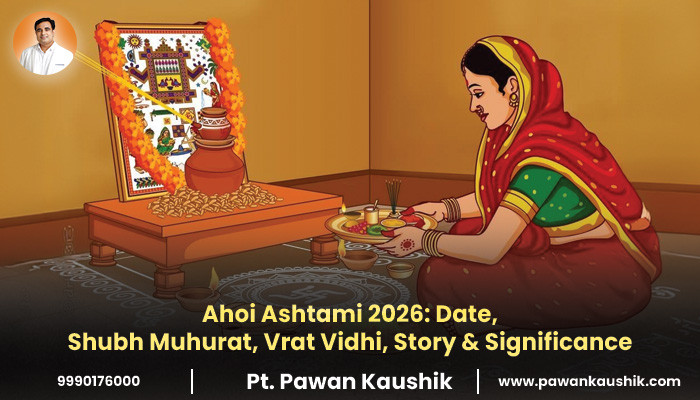 Ahoi Ashtami is a sacred and important Hindu festival observed by a Mother for the well-being, long life, good health and fortune of her children. The festival holds a special value for mothers who observe a day-long fast without food or water and break it by sighting the stars (constellation), following all the worship rituals.
The festival falls three to four days before Karwa Chauth and eight days before Diwali and is predominantly celebrated across North India. The blog covers all the important details of Ahoi Ashtami 2026 date, puja, and muhurat for all associated rituals, stories, fast vidhi and others.
When Is Ahoi Ashtami?
If you are looking for the Ahoi Ashtami dates and muhurat in the current year, go through the city-wise details below:Ahoi Ashtami 2026 Shubh Muhurat: Date & Timing for Ahoi Ashtami Rituals
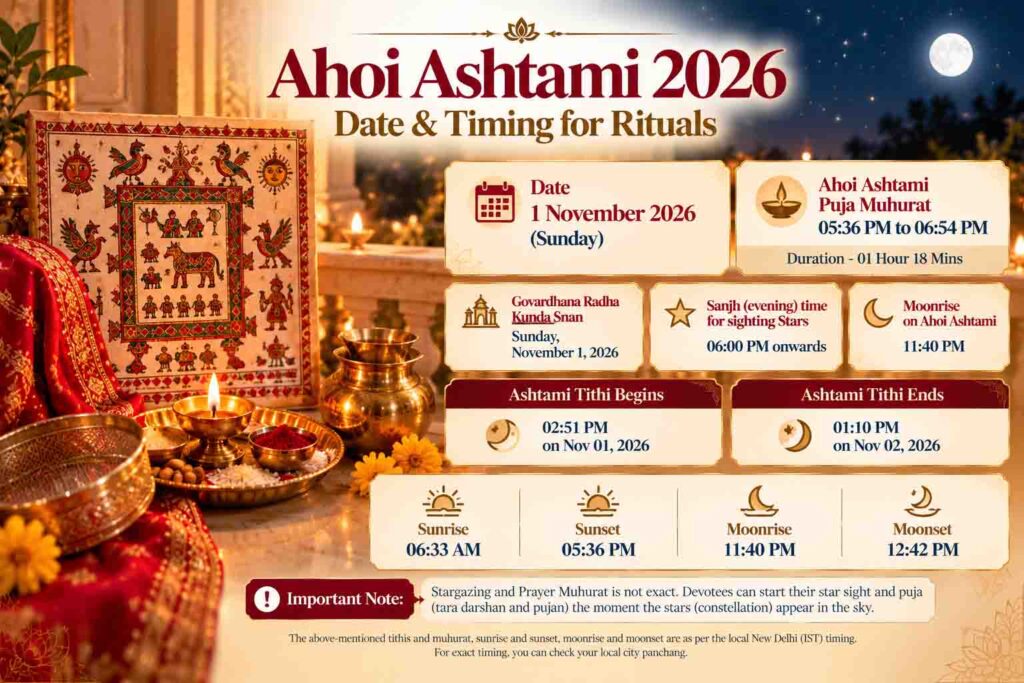 Ahoi Ashtami 2026 falls on 1st of November (Sunday). Check the following muhurat for puja and evening rituals:
- Ahoi Ashtami Puja Muhurat – 05:36 PM to 06:54 PM
- Duration – 01 Hour 18 Mins
- Govardhana Radha Kunda Snan on Sunday, November 1, 2026
- Sanjh (evening) time for sighting Stars – 06:00 PM onwards
- Moonrise on Ahoi Ashtami – 11:40 PM
- Ashtami Tithi Begins – 02:51 PM on Nov 01, 2026
- Ashtami Tithi Ends – 01:10 PM on Nov 02, 2026
- Sunrise– 06:33 AM
- Sunset-05:36 PM
- Moonrise- 11:40 PM
- Moonset- 12:42 PM
Ahoi Ashtami 2026 Shubh Muhurat: City-wise Puja Muhurat, Sighting Star and Moonrise Timing
|
City |
Date | Ahoi Asthami Puja Muhurat | Time for sighting Stars |
Moonrise Time |
|
New- Delhi |
1 November, 2026 | 05:36 PM to 06:54 PM | 06:00 PM onwards | 11:40 PM |
| Gurgaon | 1 November, 2026 | 05:37 PM to 06:55 PM | 06:01 PM |
11:41 PM |
|
Chandigarh |
1 November, 2026 | 05:35 PM to 06:53 PM | 06:00 PM | 11:38 PM |
| Lucknow | 1 November, 2026 | 05:24 PM to 06:41 PM | 05:48 PM |
11:28 PM |
|
Jaipur |
1 November, 2026 | 05:44 PM to 07:01 PM | 06:08 PM | 11:50 PM |
| Bhopal | 1 November, 2026 | 05:42 PM to 06:59 PM | 06:05 PM |
11:49 PM |
|
Dehradun |
1 November, 2026 | 05:31 PM to 06:49 PM | 05:55 PM | 11:34 PM |
| Shimla | 1 November, 2026 | 05:33 PM to 06:51 PM | 05:58 PM |
11:36 PM |
What is Ahoi Asthami?
Ahoi Asthami is a Mother’s festival for their children to seek protection, long life, and overall well-being. Traditionally, the vrat was observed in ancient times for sons, and now it is observed for all children (sons and daughters).The festival falls on the asthami tithi of the lunar fortnight (asthami tithi of Kartik Mas). However, in regions like Maharashtra, Gujarat, and many southern regions where the Amanta calendar is followed, the same day is counted as part of Ashwin instead. Devotees observe the vrat without water or food (Nirjala vrat) and keep it day-long, breaking it after the argh (water) offering to the Stars in the sky at dusk.
The festival worships the Ahoi Mata, a form of Parvati, and the divine protector of children. Ahoi Asthami is also called Ahoi Aathe and is mainly observed in the northern part of India, including Uttar Pradesh, Haryana, Punjab, Rajasthan, and Delhi.
Ahoi Asthami is observed by those who wish to conceive and by women who have difficulties in giving birth. According to tradition, taking a dip in Radha Kund in Mathura’s Braj region on this day is considered auspicious for women seeking the blessing of children.
Ahoi Asthami Meaning?
The word Ahoi derives from the Sanskrit root Aho-, which means “anhoni”. Also, on the asthmi tithi of the Kartik month, the festival of Ahoi Asthami is observed by a mother to seek blessings from the Ahoi Mata so that harm may be turned aside from their children.Ahoi Asthami Vrat Katha: The Story Behind the Festival
Ahoi Asthami story or Vrath Katha is a traditional legend that is told aloud by an elder woman, listened to by the fasting mother at dusk on the tithi of Ahoi Asthami. The katha is all about a mother’s repentance and devotion. Below is the description of the katha, highlighting the origin and Ahoi Asthami history:Once upon a time, there lived a moneylender and his wife in a village who had 7 sons. Days before Diwali, when the household cleaning began, the wife went digging clay with a spade (as she wanted red soil for plaster and to repair the walls of her house.
While digging the soil, the spade touched a cub (baby animal). The woman was not aware that inside the forest where she was digging, a Syahu or porcupine, had made its den. Porcupine here means an animal with sharp, needle-like quills on its body and cubs are their babies.
The spade, or kind of axe, struck the baby cub, and he died. This leaves the animal (porcupine) in sorrow, as per the tale, and she cursed the woman that she would also bear the same pain. When the woman returned home, she found one of his sons was ill, and later he died; then one after another, all of her sons died.
This tragedy left the woman shattered and heartbroken. She went to the elder woman in her village and shared her sorrow and the misery that had happened. The woman advised her to observe the fast of Kartik Ashtami and draw a picture of the deity Ahoi, and beside that, the diagram of Syahu (the animal who lost her child) and her baby cubs on the wall in the courtyard. The old woman also recommended that she share her story standing beside the wall and seek forgiveness from Ahoi Mata and Syahu at dusk.
The woman then faithfully observed the Ahoi fast and did the same as advised with devotion. She also offered argh to the star on the asthami tithi of Kartik fortnight and performed the rituals of Tara Darshan (stargazing worship). As the year passed, she continued the Ahoi worship and fast.
As per the telling (vrat katha), Ahoi Mata was moved by her devotion, and the syahu forgave her too. According to the legend of Ahoi Ashtami, which is told in most households, the 7 sons of the woman were restored and came back to life. The incident marks the beginning of the festival, and women in the village started observing the vrat; it spread from house to house and became a tradition.
The story is a traditional tale passed down through generations, rather than a historical account. Its details may vary from one region or family to another, so the version traditionally told in your family is the one to follow.
Ahoi Ashtami Bhog
The prime food that is prepared on the festival of Ahoi Asthami is the Malpua, halwa, kheer, puri, boiled chana, mathari, water chestnut (singhara), etc. During the Argh and worship of Ahoi Mata, the bhog (Ahoi Asthami Prasad) includes the above-mentioned food items and seasonal fruits and sweets.The Baya or Bayana is prepared by the daughter-in-law and is offered to the Mother-in-law who keeps the fast. The baya consists of a thali that has different food items, including sweets, cloth, money, etc.
The Ahoi Ashtami bhog often follows the number eight, symbolising Ashtami, the eighth lunar day. Eight pooris, mathris or puas are commonly prepared during the observation of rituals. This is due to the festival observance that happens on the Ashtami tithi of the Kartik month.
Ahoi Ashtami Bhog Items
- Puri – 8 pieces
- Pua – 8 pieces
- Halwa
- Kheer – in some families
- Fruits – according to family tradition
- Singhara (water chestnut) – in some traditions
- Other traditional sweets – depending on regional customs
Ahoi Asthami Vrat Vidhi: What are the Fast Rules?
If you are observing the vrat of Ahoi Asthami in 2026, read the following Ahoi Asthami fast vidhi to understand the rules you should follow:The standard form of vrat is Nirjala, which means no water and no food during the complete session of the fast. A woman observing the vrat needs to avoid the intake of food and water, and anything else, from sunrise until the star appears in the sky. Those who wish to break the fast only after the Moon is visible can wait for the moon to appear and then break their vrat and have food.
Also, a fasting Mother should avoid any tamsic food even after she breaks the vrat. She should also be cautious about any harsh words she utters and avoid any quarrel and negative thinking. Cutting (nails, hair, plants, etc.) or digging activities are also prohibited. Using sharp objects like scissors and a spade is also prohibited- a rule drawn directly from the katha.
Who Should Not Keep a Strict Nirjala Fast?
Pregnant women, elderly people, children, and those with health concerns or regular medication should not feel compelled to follow a strict nirjala fast. They can choose a falahari or water-allowed fast, or modify the vrat according to their individual needs. Anyone with a medical condition should follow medical advice rather than undertaking prolonged fasting.The important point is that Ahoi Ashtami fasting has a strong traditional form, but the exact food, water and fasting restrictions may vary by family and region.
Ahoi Ashtami vs Karwa Chauth: What Is the Difference?
|
Aspect |
Ahoi Ashtami | Karwa Chauth |
| Main Purpose | Children’s well-being |
Husband’s well-being and marital longevity |
|
Main deity/tradition |
Ahoi Mata | Karwa Mata/Parvati traditions |
| Fast-breaking | Star sighting |
Moon sighting |
|
Main observer |
Traditionally mothers | Traditionally married women |
|
Main ritual focus |
Children and family well-being |
Marriage and husband |
| Tithi | Kartik Krishna Ashtami |
Kartik Krishna Chaturthi |
Ahoi Ashtami Puja Vidhi: Step-by-Step
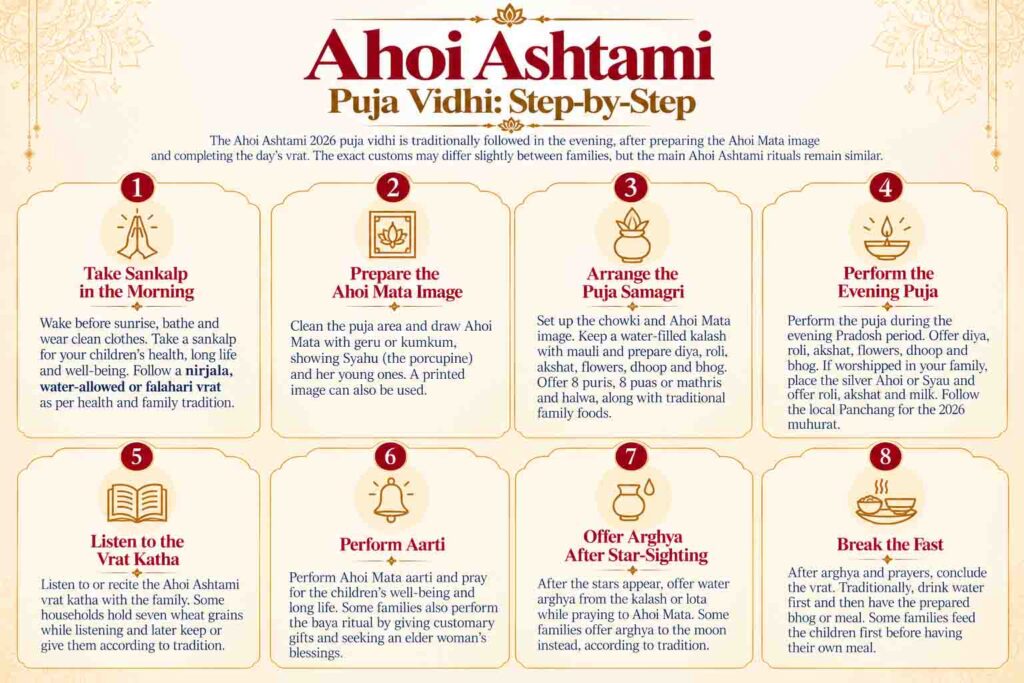 The Ahoi Ashtami 2026 puja vidhi is traditionally followed in the evening, after preparing the Ahoi Mata image and completing the day’s vrat. The exact customs may differ slightly between families, but the main Ahoi Ashtami rituals remain similar.
Step 1. Take Sankalp in the Morning
Wake up before sunrise, take a bath and wear clean clothes. Take a sankalp for the vrat, praying for the health, long life and well-being of your children. Those observing a strict vrat may keep it nirjala, while others may follow a water-allowed or falahari fast according to their health and family tradition.Step 2. Prepare the Ahoi Mata Image
During the day, clean the puja area and draw Ahoi Mata on a clean wall using geru, kumkum or another traditional material. The figure is usually shown with eight corners or sections, along with Syahu, the porcupine, and her young ones. A printed Ahoi Mata picture can also be used if drawing is not practical.Step 3. Arrange the Puja Samagri
Place a clean wooden platform or chowki and arrange the Ahoi Mata image. Keep a kalash filled with water, with mauli tied around it. Prepare the puja thali with diya, roli, akshat, flowers, dhoop and the traditional bhog.The bhog includes 8 puris, 8 puas or mathris and halwa, along with other foods followed in the family, such as milk-rice, fruits, radish or water chestnut.
Step 4. Perform the Evening Puja
The main puja is performed during the evening Pradosh period. Light the diya and offer roli, akshat, flowers, dhoop and bhog to Ahoi Mata. In families that worship a silver Ahoi or Syau, it is also placed before Ahoi Mata and worshipped with roli, akshat and milk.For Ahoi Ashtami 2026, the exact puja muhurat depends on the city. So the local Panchang should be followed for the final timing. You can check the muhurat details for puja and other rituals mentioned above in the table in the dates section.
Step 5. Listen to the Vrat Katha
The women of the family sit together and listen to or recite the Ahoi Ashtami vrat katha. In some households, seven grains of wheat are held in the hand while listening to the story. After the katha, these grains are kept or given according to family custom.Step 6. Perform Aarti
After the katha, perform Ahoi Mata aarti and offer prayers for the well-being and long life of the children. Some families also complete the traditional baya ritual at this stage by giving the customary gifts and seeking the blessings of an elder woman.Step 7. Offer Arghya After Star-Sighting
After the stars become visible, offer arghya with water from the kalash or lota while praying to Ahoi Mata. Star-sighting is the customary way of concluding the vrat. Some households instead offer arghya to the moon, so the family tradition should be followed.Step 8. Break the Fast
After the customary arghya and prayers, the vrat is concluded. Traditionally, the fasting woman first drinks water and then has the prepared bhog or meal. Some families also feed the children first before having their own meal.Note: Ahoi Ashtami customs are primarily household and regional traditions. The use of a silver Syau, seven grains, baya, particular bhog items and whether arghya is offered to the stars or moon may therefore differ from one family to another.