+91 9990176000
 +91 9999097600
 CALENDAR 2026


 Pitru Paksha is one of the most spiritually important periods in Sanatan Dharma, dedicated to remembering ancestors and expressing gratitude toward previous generations. During these sacred days, people perform Shradh, Tarpan, and Pind Daan rituals with devotion to honor departed souls and seek blessings for peace, harmony, and family well-being.
For many families, Pitru Paksha is not only a religious observance but also an emotional and spiritual connection with their lineage. It is believed that during this period, ancestors come closer to the earthly realm, and rituals performed with sincerity help strengthen ancestral blessings and spiritual balance within the family.
In Hindu traditions, Pitru Paksha is associated with Shradh rituals, Pitra Dosha remedies, ancestor worship, charity, Tarpan vidhi, and spiritual discipline. From scriptures like Garuda Purana to regional customs followed across India, this sacred fortnight holds deep importance in Vedic traditions and family life.
Pitru Paksha 2026 dates and Shradh Calendar
According to the Hindu Panchang, Pitru Paksha 2026 will begin on 26 September 2026 and conclude on 10 October 2026 with Sarva Pitru Amavasya.Pitru Paksha 2026 Tithi List
- Purnima Shraddha – 26 September 2026, Saturday
- Pratipada Shraddha – 27 September 2026, Sunday
- Dwitiya Shraddha – 28 September 2026, Monday
- Tritiya Shraddha – 29 September 2026, Tuesday
- Maha Bharani Shraddha – 29 September 2026, Tuesday
- Chaturthi Shraddha – 30 September 2026, Wednesday
- Panchami Shraddha – 30 September 2026, Wednesday
- Shashthi Shraddha – 1 October 2026, Thursday
- Saptami Shraddha – 2 October 2026, Friday
- Ashtami Shraddha – 3 October 2026, Saturday
- Navami Shraddha – 4 October 2026, Sunday
- Dashami Shraddha – 5 October 2026, Monday
- Ekadashi Shraddha – 6 October 2026, Tuesday
- Dwadashi Shraddha – 7 October 2026, Wednesday
- Magha Shraddha – 7 October 2026, Wednesday
- Trayodashi Shraddha – 8 October 2026, Thursday
- Chaturdashi Shraddha – 9 October 2026, Friday
- Sarva Pitru Amavasya – 10 October 2026, Saturday
What happens during Pitru Paksha?
During Pitru Paksha, families perform rituals dedicated to departed ancestors. Shradh, Tarpan, Pind Daan, food offerings, donations, and prayers are performed according to family traditions and Shradh Tithi.Many people visit holy places such as Gaya, Prayagraj, Haridwar, Nashik, Trimbakeshwar, and Varanasi to perform Pind Daan and ancestor rituals. Others perform Shradh at home with devotion and proper vidhi.
The atmosphere during Pitru Paksha is usually simple, disciplined, and spiritually focused. Families avoid unnecessary celebrations and instead spend time in prayer, remembrance, charity, and religious observance.
Meaning and spiritual significance of Pitru Paksha
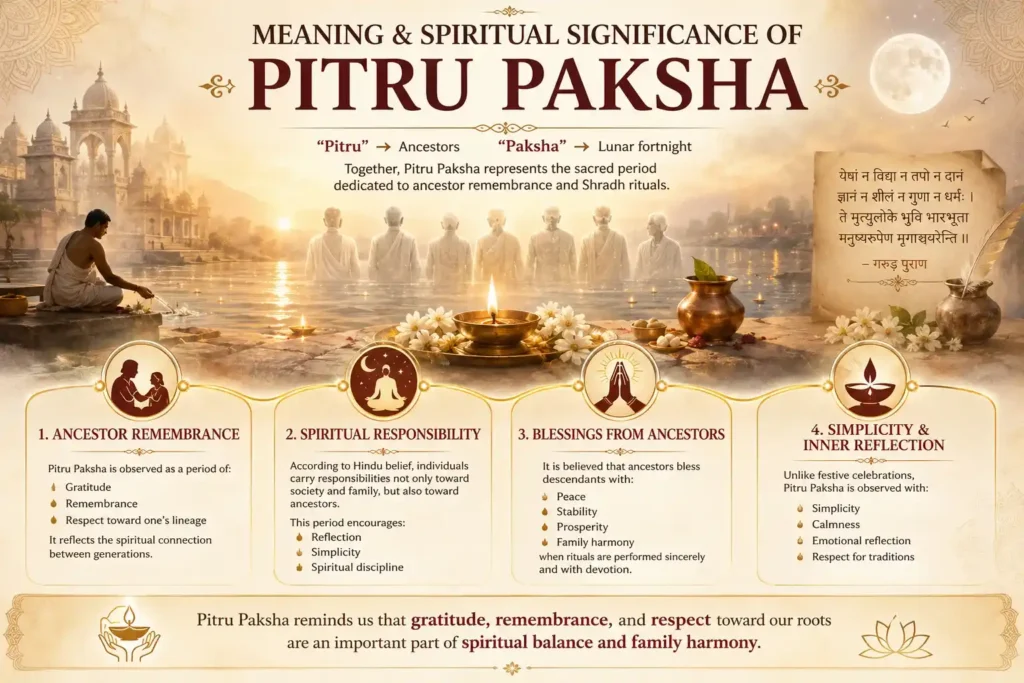
The word “Pitru” refers to ancestors, while “Paksha” means a lunar fortnight. Together, Pitru Paksha represents the sacred period dedicated to ancestor remembrance and Shradh rituals.
According to Hindu belief, every individual carries responsibilities not only toward family and society but also toward ancestors. Pitru Paksha is therefore observed as a period of gratitude, remembrance, and spiritual responsibility toward one’s lineage.
It is believed that ancestors bless descendants with peace, stability, prosperity, and family harmony when rituals are performed with devotion and sincerity.
Unlike festive occasions, Pitru Paksha is observed with simplicity, inner reflection, spiritual discipline, and respect toward family traditions.
Pitru Paksha and Dakshinayan connection
According to Hindu astronomy and Vedic traditions, Pitru Paksha falls during Dakshinayan, the period when the Sun begins its southward movement.In many spiritual beliefs, Dakshinayan is associated with ancestors, introspection, karmic reflection, and spiritual practices. Ancient scriptures describe this period as spiritually suitable for Shradh, Tarpan, and prayers dedicated to departed souls.
This cosmic alignment is one reason Pitru Paksha is considered highly significant in Sanatan Dharma.
Why Shradh is performed during Pitru Paksha
Shradh is considered one of the oldest ancestral rituals in Hindu tradition. The word “Shradh” itself comes from “Shraddha,” meaning faith and devotion.According to Garuda Purana, Brahma Purana, and other scriptures, Shradh rituals help descendants express gratitude toward ancestors and fulfill ancestral responsibilities. These rituals are believed to spiritually nourish departed souls and strengthen ancestral blessings within the family.
In many traditions, food prepared during Shradh includes items loved by ancestors during their lifetime. Water, sesame seeds, rice, prayers, and donations are offered with respect and remembrance to the ancestors.
Shradh is not only about rituals; it is also about acknowledging family roots, traditions, sacrifices, and the blessings received from previous generations.
The concept of Pitra Rin and ancestral debt
Hindu philosophy describes three important debts in life – Dev Rin, Rishi Rin, and Pitra Rin.Pitra Rin refers to the responsibility individuals carry toward their ancestors and family lineage. According to spiritual belief, Shradh and Tarpan are considered ways of repaying this ancestral debt through gratitude, remembrance, and religious duties.
This is why Pitru Paksha holds emotional and spiritual importance in many Hindu families even today.
Importance of different Shradh Tithis
Every Shradh Tithi during Pitru Paksha carries specific importance according to the lunar date associated with the ancestor’s death.Navami Shradh, also known as Matri Navami, is especially dedicated to mothers and female ancestors. Chaturdashi Shradh is observed for individuals who experienced sudden or unnatural death.
Sarva Pitru Amavasya is regarded as the most important day of Pitru Paksha. People who do not know the exact Tithi of their ancestors often perform Shradh on this day.
Because of these distinctions, many families consult Panchang or experienced priests to determine the proper Shradh date and vidhi.
Pitru Paksha rituals and Shradh vidhi
Pitru Paksha rituals are generally performed with simplicity, purity, and discipline. Though traditions may vary across regions, the essence of Shradh remains centered around remembrance, offerings, prayers, and charity.The ritual usually begins with Sankalp, where the devotee remembers ancestors and takes a spiritual pledge for the ceremony. Tarpan is then performed by offering water mixed with black sesame seeds while chanting mantras.
Pind Daan follows, where pindas made from rice, barley flour, ghee, sesame, and honey are offered for the peace of departed souls.
Many families also feed Brahmins, cows, crows, or needy people during Shradh. Donations of clothes, food grains, utensils, and daily essentials are considered spiritually meaningful during Pitru Paksha.
Important practical rules followed during Shradh
Many traditional practices are carefully followed during Pitru Paksha rituals.Tarpan is usually performed facing the south direction, which is traditionally associated with ancestors. Black sesame seeds are considered highly important during Shradh rituals because they symbolize purification and spiritual offerings.
Fresh food is prepared with cleanliness and devotion. Rituals are usually performed calmly and sincerely without anger, ego, or unnecessary distractions.
In many traditions, people also avoid cutting hair, shaving, or engaging in luxurious activities during Pitru Paksha.
Best Muhurat and time for Shradh
According to Hindu tradition, Aparahna Kaal is considered most suitable for Shradh rituals. Kutup Muhurat and Rohina Muhurat are also regarded as spiritually favorable timings.Since Muhurat may vary according to location and Panchang calculations, many families seek guidance from priests or the best astrologers in India like Pt. Pawan Kaushik, before performing Shradh ceremonies.
Legends associated with Pitru Paksha
One of the most popular stories associated with Pitru Paksha is the story of Karna from Mahabharata.According to the legend, after Karna’s death, he received gold and jewels in heaven instead of food because throughout his life he had donated wealth but never offered food or Shradh to his ancestors. When he asked the reason, he was granted permission to return to earth for sixteen days to perform rituals and offer food in memory of his ancestors.
This belief is considered one of the origins behind the observance of Pitru Paksha and Shradh rituals.
Another important belief is associated with Lord Ram, who is believed to have performed Shradh rituals for his father King Dasharatha at Gaya.
What is Pitra Dosha in astrology?
According to Vedic astrology, Pitra Dosha is associated with ancestral karmic imbalance reflected in a horoscope.Astrologers generally study planetary combinations involving the Sun, Rahu, Saturn, and the ninth house while analyzing Pitra Dosha in Kundli.
Many people believe that unresolved ancestral responsibilities or karmic imbalance may create recurring struggles in life. Pitru Paksha is therefore considered highly important for performing remedies associated with Pitra Dosha.
Common signs associated with Pitra Dosha
Repeated financial struggles
Some individuals experience financial instability, career obstacles, or lack of growth despite continuous effort and hard work.Family instability and conflicts
Frequent misunderstandings, lack of peace in the household, recurring disputes, or emotional distance within the family are also commonly associated with ancestral imbalance in traditional beliefs.Delay in marriage or childbirth
In many astrological traditions, delayed marriage, relationship instability, or difficulties related to childbirth are sometimes linked with Pitra Dosha.Recurring health concerns
Repeated health issues within the family without clear long-term relief are also considered among common signs discussed in astrology.While practical causes always exist, many people seek astrology guidance during Pitru Paksha to understand whether ancestral karmic patterns are indicated in their kundli.
Remedies for Pitra Dosha during Pitru Paksha
Pitru Paksha is considered one of the most spiritually effective periods for performing ancestral remedies.Shradh, Tarpan, Pind Daan, feeding Brahmins, helping the needy, donating food, and offering black sesame seeds are widely followed remedies during this sacred fortnight.
Many people also perform Narayan Bali Puja, Pitra Dosha Nivaran Puja, or rituals at sacred pilgrimage sites such as Gaya, Prayagraj, Haridwar, Trimbakeshwar, and Varanasi.
People seeking detailed astrology guidance regarding Pitra Dosha, ancestral imbalance, or family-related obstacles according to their kundli, often consult Pt. Pawan Kaushik, widely known as one of the best astrologers in India and a famous astrologer in Gurgaon for astrology and Vastu guidance.
Can Pitru Paksha rituals be performed at home?
Yes, many families perform Pitru Paksha rituals at home with devotion and proper discipline.A clean and peaceful space is prepared for the rituals. Ancestors are remembered respectfully while offering water, sesame seeds, flowers, prayers, and food.
Pindas made from rice and sesame are offered with prayers for peace and liberation of departed souls. After the rituals, food donation or feeding needy individuals is considered spiritually meaningful.
The essence of Shradh lies more in sincerity, gratitude, and devotion than external complexity.
Foods to avoid during Pitru Paksha
Pitru Paksha is traditionally observed with sattvic discipline and simplicity.Many households avoid non-vegetarian food, alcohol, tobacco, onion, garlic, stale food, and tamasic items during this period. Certain traditions also restrict specific pulses, grains, and spices considered unsuitable during Shradh rituals.
Freshly prepared sattvic food is generally preferred because it symbolizes purity and spiritual discipline.
Also check out our thoughts on Things to Avoid during Pitru Paksha
Why auspicious activities are avoided during Pitru Paksha
Pitru Paksha is dedicated to remembrance, prayer, and ancestral rituals. For this reason, celebrations such as marriages, engagements, housewarming ceremonies, and festive events are generally avoided during this period.According to traditional beliefs, these days are meant for introspection, gratitude, and spiritual observance rather than worldly celebrations.
Mantras associated with Pitru Paksha rituals
Mantras hold an important place during Shradh and Tarpan rituals.Pitru Gayatri Mantra
“ॐ सर्व पितृभ्यो विद्महेजगत धारिणी धीमहि
तन्नो पितृ प्रचोदयात्॥”
This mantra is chanted to seek blessings and peace for ancestors.
Pitru Tarpan Mantra
“ॐ पितृभ्यः स्वधा नमः॥”This simple mantra is commonly recited while offering water during Tarpan rituals.
Invocation Mantra
“आगच्छन्तु मे पितरः इमं गृह्णन्तु जलांजलिम्॥”This mantra is traditionally recited while respectfully inviting ancestors during Shradh rituals.
Regional traditions related to Pitru Paksha
Pitru Paksha is observed across India with different customs and regional traditions.In Bengal, the observance is popularly known as Pitri Pokkho. In several North Indian regions, it is also referred to as Kanagat or Shradh Paksha.
In South India, ancestor rituals are performed with regional customs and Vedic traditions specific to local culture. Despite these variations, the spiritual purpose remains the same- honoring ancestors and seeking their blessings.
Benefits of Shradh during Pitru Paksha
According to Hindu beliefs, Shradh performed with sincerity during Pitru Paksha helps strengthen spiritual balance and ancestral blessings within the family.Many people believe these rituals help:
- improve family harmony,
- reduce recurring obstacles,
- bring mental peace,
- support financial stability,
- strengthen family relationships,
- and create a more positive atmosphere at home.
The role of astrology during Pitru Paksha
Pitru Paksha is considered highly significant from an astrological perspective as well. Many individuals seek horoscope analysis during this period to understand whether ancestral karmic patterns or Pitra Dosha may be affecting important areas of life.Astrology consultations during Pitru Paksha are often focused on:
- family-related struggles,
- recurring obstacles,
- delayed marriage,
- career instability,
- financial imbalance,
- and remedies connected with ancestral peace.
Also read: 14 Types of Pitra Dosh
Conclusion
Pitru Paksha 2026 is not only a period of rituals but also a time of remembrance, gratitude, spiritual reflection, and connection with one’s roots.Through Shradh, Tarpan, Pind Daan, charity, and prayers, families honor the contribution and blessings of their ancestors while seeking peace and spiritual harmony for departed souls.
This sacred fortnight reminds people of the deep bond between generations and the importance of preserving traditions, respect, gratitude, and spiritual values within the family lineage.