+91 9990176000
 +91 9999097600
 CALENDAR 2026


 Baisakhi is one of the most vibrant and meaningful festivals celebrated in India, especially in the northern states of Punjab and Haryana. The festival marks the beginning of the harvest season, celebrates cultural traditions, and holds deep religious importance for the Sikh community.
Celebrated every year in April, Baisakhi usually falls on 13 April or 14 April, depending on the solar calendar. In 2026, Baisakhi will be celebrated on 14 April (Tuesday). The festival represents gratitude for nature’s blessings, unity within communities, and remembrance of an important historical event in Sikh history.
People celebrate Baisakhi with prayers, traditional dances, festive meals, and community gatherings. The day reflects joy, prosperity, and the spirit of togetherness.
Baisakhi 2026 Date
In 2026, Baisakhi will be celebrated on 14 April (Tuesday).The festival is observed around this time because it marks the Sun’s transition into Aries (Mesha Sankranti). This time (transit period) is considered highly significant in Indian traditions and symbolises the beginning of a new agricultural cycle.
History of Baisakhi (Vaisakhi)
The history of Baisakhi is closely connected with Sikh heritage and a significant event that took place in 1699.On this day, Guru Gobind Singh Ji, the tenth Sikh Guru, gathered thousands of followers at Anandpur Sahib. During this historic gathering, he established the Khalsa Panth, a community dedicated to spiritual discipline, courage, and justice.
Guru Gobind Singh Ji called for volunteers who were willing to devote themselves completely to faith and righteousness. Five individuals stepped forward with complete devotion. These five followers later became known as the Panj Pyare (The Five Beloved Ones).
The Guru initiated them into the Khalsa and introduced a code of conduct that emphasised equality, courage, and service. This event became one of the most defining moments in Sikh history.
Significance of Baisakhi (Vaisakhi)
Baisakhi holds both religious and agricultural significance.Religious Importance
For the Sikh community, Baisakhi (Vaisakhi) marks the formation of the Khalsa Panth. The word Khalsa means “pure,” and it represents a community devoted to truth, justice, and spiritual discipline.The values associated with the Khalsa include:
- Courage
- Equality
- Selflessness
- Service to humanity
Agricultural Importance
Baisakhi is also an important harvest festival for farmers in North India. It marks the harvesting of the rabi crops, especially wheat.For farmers, this time of year represents prosperity and gratitude after months of hard work in the fields. Communities celebrate the harvest and pray for continued abundance in the coming agricultural season.
Baisakhi Celebrations
Baisakhi celebrations are full of colour, enthusiasm, and traditional customs. The festival brings together families, communities, and religious institutions.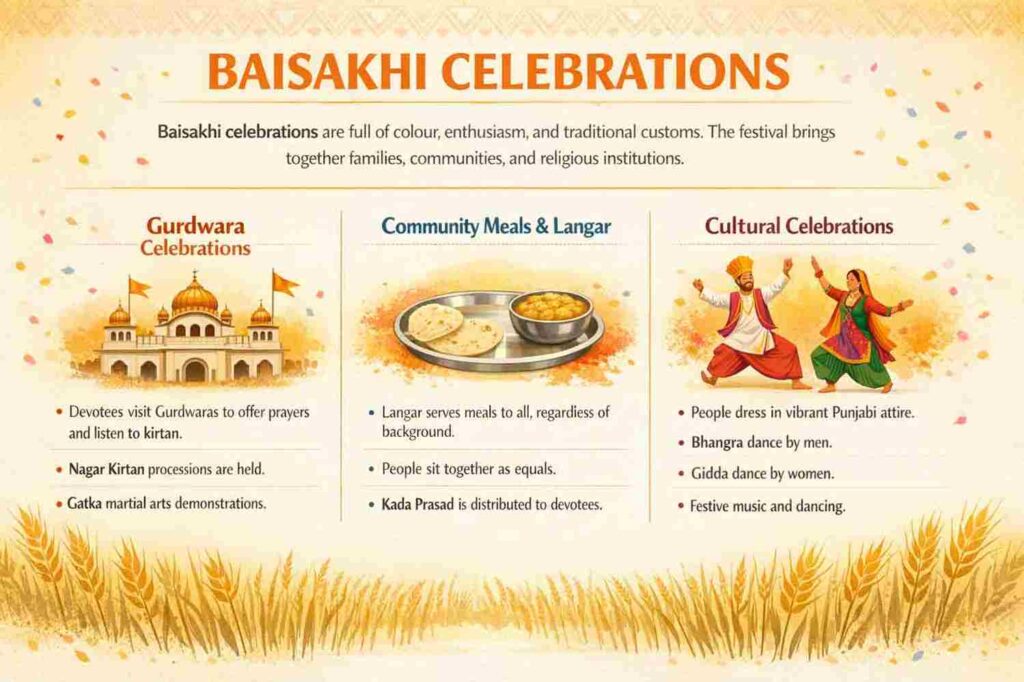
Celebrations at Gurdwaras
On Baisakhi, devotees visit Gurdwaras to offer prayers and seek blessings. The Guru Granth Sahib is recited, and devotional hymns (kirtan) are sung.Many Gurdwaras organise Nagar Kirtans, which are religious processions led by the Sikh holy scripture. Devotees sing hymns and perform traditional martial arts demonstrations known as Gatka.
Community Meals and Langar
One of the most important traditions of Baisakhi is Langar, the community meal served in Gurdwaras. Everyone is welcomed to eat together, regardless of caste, religion, or social status.The sacred offering known as Kada Prasad is also distributed among peoples.
Cultural Celebrations
Baisakhi is also celebrated as a lively cultural festival. People wear colourful Punjabi attire and participate in energetic folk dances.Two of the most popular dances performed during Baisakhi are:
- Bhangra – performed mainly by men
- Gidda – performed by women
Traditional Foods Prepared on Baisakhi
Food plays an important role in Baisakhi celebrations. Many traditional Punjabi dishes are prepared to mark the occasion.Some popular Baisakhi delicacies include:
- Kadhi Chawal
- Meethe Chawal (Sweet Rice)
- Kesar Phirni
- Badam Puri
- Chhole Kulche
- Makki di Roti with Sarson da Saag
Baisakhi Celebrations Around the World
Baisakhi is celebrated not only in India but also by Sikh communities across the world. Countries such as Canada, the United Kingdom, the United States, and Australia organise grand celebrations.Large Nagar Kirtan processions, cultural programmes, and community gatherings are organised in cities with significant Sikh populations. These celebrations help preserve traditions and strengthen cultural identity among Sikh communities abroad.
Cultural and Social Importance of Baisakhi
Baisakhi represents unity, gratitude, and cultural pride. The festival encourages people to:- Respect their traditions and heritage
- Strengthen community bonds
- Celebrate hard work and prosperity
- Promote equality and service

Conclusion
Baisakhi 2026 is a festival that beautifully combines history, spirituality, and cultural celebration. It commemorates the formation of the Khalsa Panth, honours the harvest season, and reflects the values of courage, equality, and gratitude.Every year, the festival brings communities together in celebration and reminds people of the importance of unity and tradition. Through prayers, music, food, and joyful gatherings, Baisakhi continues to hold a special place in the hearts of millions around the world.